
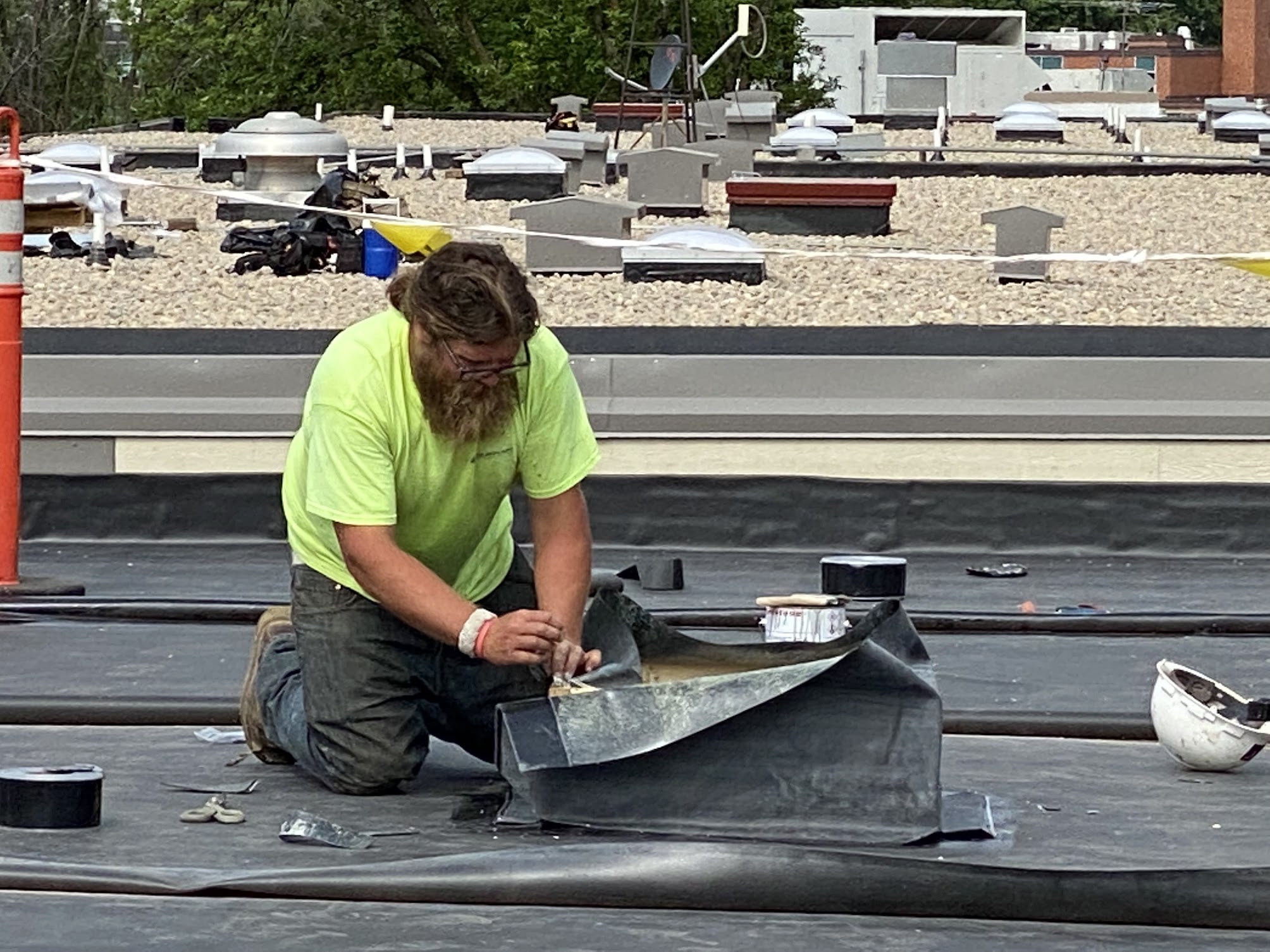
Commercial Roof Preventive Maintenance Program

Commercial Roof Preventive Maintenance Program in Austin, TX

Commercial Roof Preventive Maintenance Program in Austin, TX

  • About
  • Services
    • All Services
    • Built-Up Roofing Aust
    • Commercial Roof Coatings Aust
    • Commercial Roof Condition Reporting Aust
    • Commercial Roof Inspections Aust
    • Commercial Roof Leak Repair Aust
    • Commercial Roof Maintenance Aust
    • Commercial Roof Repair Aust
    • Commercial Roof Replacement Aust
    • Commercial Skylight Repair Aust
    • EPDM Roofing Aust
    • All Roof Systems
    • Ballasted Roof Systems Aust
    • Built-Up Roof (BUR) Systems Aust
    • Cool Roof Systems Aust
    • EPDM Roof Systems Aust
    • Modified Bitumen Roof Systems Aust
    • PVC Roof Systems Aust
    • Silicone Roof Coating Systems Aust
    • Spray Polyurethane Foam Roof Systems Aust
    • Standing Seam Metal Roof Systems Aust
    • TPO Roof Systems Aust
    • All Industries
    • EV Facility Roofing Aust
    • Education Facility Roofing Aust
    • Entertainment & Music Venue Roofing Aust
    • Financial Services Roofing Aust
    • Government Facility Roofing Aust
    • Healthcare Roofing Aust
    • Hospitality & Hotel Roofing Aust
    • Logistics & Distribution Roofing Aust
    • Semiconductor & Fab Roofing Aust
    • Tech Campus Roofing Aust
    • All Damage & Repair
    • Fire Damage Roof Repair Aust
    • Freeze Damage Roof Repair Aust
    • Hail Damage Roof Repair Aust
    • Insurance Claim Roof Documentation Aust
    • Leak Damage Roof Repair Aust
    • Storm Damage Roof Repair Aust
    • Structural Roof Damage Assessment Aust
    • Tornado Damage Roof Repair Aust
    • Water Damage Roof Repair Aust
    • Wind Damage Roof Repair Aust
    • All Property Types
    • Distribution Center Roofing Aust
    • Manufacturing Facility Roofing Aust
    • Medical Building Roofing Aust
    • Multifamily Roofing Aust
    • Office Building Roofing Aust
    • Religious Building Roofing Aust
    • Restaurant Roofing Aust
    • Retail Roofing Aust
    • School Roofing Aust
    • Warehouse Roofing Aust
    • All Capabilities
    • Commercial Roof Condition Reports Aust
    • Commercial Roof Inspections Aust
    • Commercial Roof Moisture Surveys Aust
    • Commercial Roof Zone Mapping Aust
    • Competitive Bid Coordination
    • Infrared Roof Scanning Aust
    • Manufacturer Warranty Management
    • Owner Rep Services — Commercial Roofing Aust
    • Replacement vs. Recover Analysis Aust
    • Roof Asset Management Aust

    Austin's commercial market stretches from the Domain and North Austin tech corridor along US-183 to the South Lamar and East Cesar Chavez redevelopment zones, with major industrial activity in Round Rock and Pflugerville. Commercial roof preventive maintenance programs in this market protect warranty validity, provide the semi-annual inspection documentation that major manufacturers require, and generate capital planning forecasts that let property owners and facilities managers budget for roofing expenditures before an emergency forces the decision.

    Commercial roof preventive maintenance in Austin, TX is the most cost-effective strategy for extending roof system service life and protecting your capital investment. Most commercial roofing warranties — TPO, PVC, EPDM, and modified bitumen systems — require documented semi-annual or annual maintenance inspections to remain valid. Our maintenance program fulfills those warranty requirements, generates the documentation your warranty requires, and produces a capital planning forecast that tells you when major maintenance or replacement will be needed — before you're dealing with an emergency.

    A commercial roof maintenance visit in Austin includes a complete roof inspection with written condition report, photographic documentation of all observed deficiencies, minor repairs performed during the inspection visit (drain clearing, minor membrane repairs at splits or blisters, flashing reseats that have lifted), and a priority list of work needed before the next inspection cycle. Drain clearing alone — which most maintenance programs treat as a separate billable service — is included in every inspection visit because blocked drains are the single most preventable cause of commercial roof failures.

    Our maintenance program also generates a capital planning forecast that gives your facilities or property management team a 3-5 year outlook on roofing expenditures by building. For commercial real estate portfolios in Austin with multiple buildings, a consistent annual maintenance program across the portfolio gives you a systemwide condition picture that reactive repair calls can never provide. You'll know which buildings are approaching end of system life before they start leaking, and you can budget accordingly.

    Properties under commercial property insurance policies in Austin may receive premium reductions or favorable renewal terms when documented maintenance records demonstrate a proactive maintenance program. We provide maintenance records in a format compatible with standard commercial property management software and insurance documentation requirements.

    Commercial Roof Maintenance Questions

    Our standard maintenance visit includes: complete roof inspection with written condition report and photographs, drain clearing and confirmation of drainage function, minor membrane repairs (splits, blisters, open laps under 12 inches), flashing reseats at lifted terminations, HVAC curb cap inspection and re-caulking where needed, and a written priority list of work needed before the next cycle. The visit report goes to the property owner or facilities manager within 48 hours of the inspection.

    Yes — almost all commercial roof warranties from major manufacturers (GAF, Carlisle, Firestone, Soprema, Johns Manville) require documented semi-annual or annual inspections by a qualified roofing contractor to maintain warranty validity. If you can't produce maintenance records for the inspection period, the warranty may be voided at claim time. Our maintenance program produces the documentation your warranty requires.

    The industry standard for commercial roof maintenance is twice per year — once in spring after winter weather stress and once in fall before the storm season. Roofs with high equipment density, active penetrations, or known problem areas may benefit from quarterly visits. Our maintenance agreement specifies the inspection frequency appropriate to your roof's condition and warranty requirements.

    Minor repairs performed during the inspection visit are included — minor membrane repairs under 12 inches, drain clearing, flashing reseats at lifted terminations, HVAC curb re-caulking. Larger repairs — seam replacements, significant flashing work, drain replacement — are documented as recommendations and quoted separately. The goal is to catch problems when they're minor-repair scope, not let them become significant-repair scope.

    Yes. Portfolio maintenance programs are a standard offering. We coordinate inspection schedules across all buildings in your portfolio, deliver condition reports by building and by portfolio, and maintain a capital planning spreadsheet updated after each inspection cycle. Multi-building programs receive priority scheduling during peak maintenance periods.

    Commercial Roof Preventive Maintenance Program in Austin, TX — commercial roofing assessment, documentation, and program management for TX property owners.

    TPO is the most-installed commercial single-ply membrane in Austin commercial work. We install 60-mil and 80-mil systems against manufacturer-spec details, suited to Central Texas heat loads, with 20-year no-dollar-limit warranty paths.

    Thermoplastic polyolefin (TPO) became the dominant commercial single-ply membrane in Austin over the last two decades for a straightforward reason: a properly installed white TPO roof reflects 80–90% of incident solar radiation, which matters on a flat commercial roof in a city that regularly logs 90-plus days above 100°F ambient temperature. On a dark or aged membrane, surface temperature can exceed 165°F on a peak Austin summer afternoon. On a properly installed 60-mil white TPO, that surface temperature drops to the low 100s — a material reduction in cooling load for any building without heavy rooftop shade.

    TPO is also heat-weldable at the seams, which produces mechanically superior lap joints compared to adhesive-bonded or tape-sealed membranes. When installed at correct weld temperatures and speeds — which vary by membrane brand and ambient temperature — a TPO seam is stronger than the base membrane. When installed incorrectly, the seams are the first failure point. We calibrate weld parameters to current ambient conditions, not to a fixed setting.

    Austin's hail history matters for TPO membrane selection. The June 2024 storm dropped quarter-size hail across Round Rock and Pflugerville. The November 2022 storm affected north Travis County. We specify 80-mil TPO for buildings in hail-exposed locations or those with known limitations on maintenance access — the additional membrane thickness extends impact resistance meaningfully. For buildings with frequent foot-traffic or rooftop mechanical work, we add walk pads at access routes.

    How We Install TPO on Austin Commercial Buildings

    Substrate preparation: The existing deck — typically steel or concrete for commercial applications — gets inspected for fastener pullout resistance before we anchor the insulation. Steel decks corroded below structural spec get documented and flagged for the owner; we do not install over compromised deck.

    Insulation: Polyiso board in a single or double layer depending on required R-value, mechanically fastened to deck at pattern density calculated for wind-uplift zone. A HD polyiso or gypsum cover board over the primary layer gives the TPO membrane a smooth substrate and reduces thermal bridging at fastener locations.

    Membrane: 60-mil for standard commercial applications; 80-mil for hail-exposed or high-traffic roofs. Rolls are positioned with factory-selvedge edges aligned for overlap, then hot-air welded at 1.5-inch minimum weld width. Weld quality is verified by probe test every 100 linear feet and by tensile pull test on sample welds at start of each day and after any break in production. We do not field-test only; seam width and weld temperature are logged throughout.

    Flashing: All penetrations, curbs, edges, and parapets get TPO-compatible flashing membrane, either pre-formed or cut from roll, welded to the field membrane. Parapet coping cap is aluminum or galvalume; exposed coping joints are sealed with compatible TPO sealant, not generic caulk.

    TPO Warranty Paths on Austin Projects

    Standard commercial TPO warranties run 10, 15, or 20 years from most major manufacturers. The 20-year NDL (no-dollar-limit) warranty covers material and labor cost to repair or replace any warranted failure — it is the benchmark for commercial property owners who want to transfer the roof liability to the manufacturer for the warranty period.

    NDL warranty qualification requires the manufacturer's field inspector to walk the completed roof and sign off on details. Most national TPO manufacturers have regional reps covering Central Texas. We schedule the inspection as part of the closeout sequence — the warranty document does not issue until the field inspection passes.

    Warranty maintenance is required by every major manufacturer to keep the warranty in force. Typically: one annual inspection by the contractor with a written condition report submitted to the manufacturer, caulk and sealant renewal at penetrations and terminations on the inspection schedule, and prompt repair of any membrane puncture or mechanical damage within the coverage period. We offer maintenance contracts structured to each manufacturer's requirement — not a generic annual visit.

    TPO Recover vs. Full Replacement in Austin

    If the existing roof system has dry insulation (confirmed by moisture core sampling) and a structurally sound deck, recovering over the existing system with new TPO can extend asset life 15 to 20 years at roughly half the cost of full replacement. The recover eliminates tear-off and disposal costs, which matter more on larger Austin roofs where disposal logistics (and the city's landfill tipping fees) add up.

    We do not recover over wet insulation. Wet insulation trapped under a new membrane will continue to degrade the deck, void the new membrane warranty, and produce premature failure. If core sampling shows saturation above 25% of the sampled area, full replacement is the correct scope. Between 10% and 25% wet, we often do targeted insulation replacement in wet zones before recovering the rest.

    Austin's limestone substrate can complicate drain relocation if a recover requires changing slope. We document existing drain locations and ponding patterns in the pre-scope walk and design the recover package around what the drain layout can support — not around a theoretical ideal slope.

    How does Austin's heat affect TPO weld quality?

    Heat-welding TPO in Austin's summer ambient temperatures (95–105°F) requires adjusting weld speed and air temperature settings relative to spring or fall installation. We calibrate daily at start of production and after any extended break. Crews do not run standard cool-weather settings in August — the substrate temperature affects how the membrane flows at the weld, and incorrect settings produce seams that probe-test clean but delaminate under thermal cycling.

    Is 60-mil or 80-mil TPO better for Central Texas?

    60-mil is standard for most Austin commercial applications. 80-mil is worth the additional cost per square for roofs in hail-exposed locations (north Travis County, Williamson County, and Pflugerville/Round Rock have documented hail frequency above the Austin MSA average), for roofs with regular foot traffic or mechanical maintenance access, or for buildings where management turnover makes maintenance consistency uncertain. The 20-mil difference in thickness adds meaningful impact resistance with no change in installation method.

    Can TPO be installed over an existing EPDM or BUR roof?

    In many cases, yes — subject to moisture core sampling confirming dry insulation and a structural review confirming the existing assembly can support the added dead load. The City of Austin Development Services Department requires a permit for recover projects above a certain scope threshold; we pull the permit as part of project set-up. The bigger constraint is often drain elevation: if the existing assembly is already at or near parapet height, an additional insulation-plus-membrane layer may exceed the drains, requiring drain riser modification.

    Get a TPO scope for your Austin commercial building.

    We will walk the roof, sample cores if the recover-vs-replace decision requires it, and provide a written specification you can use for comparison or direct award.

    Commercial Re-Roofing in Austin, TX begins with a structural load check. Before any tear-off is priced, the building's roof deck capacity must be verified against the weight of the proposed new assembly — new insulation, cover board, membrane, ballast if applicable, and any required drainage improvements. For commercial re-roofing in Austin, the code also controls how many membrane layers can remain on the deck: most jurisdictions follow the two-layer maximum specified in the International Building Code, which means full tear-off may be required even when the top membrane looks serviceable.

    Insulation is the largest cost driver in commercial re-roofing after tear-off labor. Energy codes in TX — whether Title 24, ASHRAE 90.1, or a local supplement — set minimum R-value targets for roof assemblies above conditioned space. A commercial re-roofing project that does not meet the current energy code may require additional insulation thickness to obtain a permit, which changes the scope, the deck load, and the tapered insulation design around drains. Commercial Roofing works through those calculations before presenting a commercial re-roofing budget so the number in the estimate reflects the actual permitted scope.

    Permit documentation for commercial re-roofing in Austin typically requires product data sheets, a roof plan or sketch showing drainage and slopes, a disposal plan for tear-off material, and sometimes a structural engineer review letter when the new assembly is heavier than the existing one. We assemble that documentation package and coordinate with the building department on the inspection schedule so the commercial re-roofing project closes without a certificate-of-occupancy hold.

    Warranty implications matter for commercial re-roofing decisions. A roof manufacturer will not extend a new system warranty over a tear-off site with an unaddressed deck repair or compromised substrate. We document deck conditions found during tear-off, provide photographic evidence of substrate quality, and give ownership the information needed to decide whether manufacturer warranty coverage is worth the additional substrate repair cost. Call or email to schedule a commercial re-roofing assessment in Austin.

    Widespread wet insulation, a second membrane layer already present, deck deterioration, repeated failed repairs, and energy code compliance gaps on a permit-requiring scope all push toward full re-roofing.

    ASHRAE 90.1 or state-specific energy codes set minimum insulation R-values that may require added insulation thickness beyond what the existing assembly provides, increasing both cost and structural load.

    Product data sheets, a roof plan or sketch, a disposal plan, sometimes a structural engineer review, and contractor licensing documentation. We assemble the permit package and coordinate the inspection schedule.

    Membrane layer count, deck condition found during inspection, moisture scan results, and the code-required maximum layer count all determine whether full tear-off or partial removal is required.

    • Church Roofing
    • Retail Roofing
    • Solar Roof Integration
    • EPDM Roofing
    • Drain Cleaning Repair
    • Manufacturing Facility Roofing
    • Roof Leak Repair
    • About

Leak points, drainage, seams, penetrations, edge metal, roof access, and interior risk should be clear before the next roof decision is priced.

Immediate repair, maintenance, coating, recover, and replacement choices should be measured against roof age, moisture risk, tenant disruption, and budget timing.

A site visit is useful when the owner needs a documented roof condition, active leak response, storm review, or a clearer capital plan.