
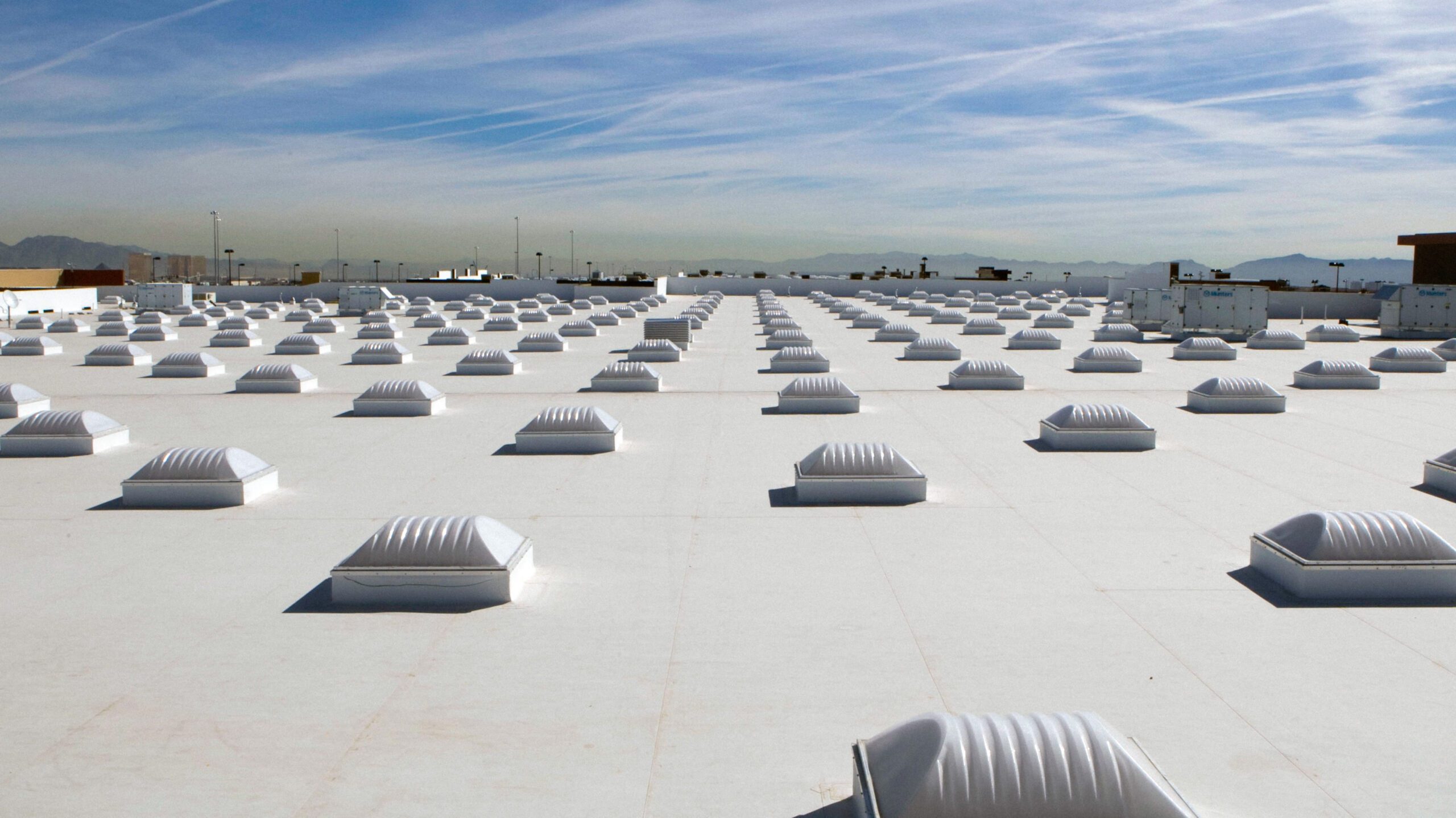
Cool Roof Systems in Austin, TX
Austin's 2021 IECC adoption places cool-roof requirements on commercial new construction and re-roofing that We specify, install, and document white-membrane and reflective-coating cool roof assemblies that meet the applicable code and rebate requirements.
Texas adopted the International Energy Conservation Code 2021 as the statewide commercial energy code, and the City of Austin has incorporated it into the local development code with some enhancements. For commercial low-slope roofing, IECC 2021 Section C402 sets minimum solar reflectance and thermal emittance requirements for roofing materials. A TPO or PVC membrane meeting the ENERGY STAR Cool Roof criteria (initial solar reflectance of 0.65 or higher and thermal emittance of 0.90 or higher) satisfies the code requirement. A dark membrane or an aged membrane that has lost reflectivity does not.
The practical stakes in Austin are significant. A low-slope commercial building with 50,000 sq ft of flat roof in the 78701 zip code, the downtown core, where buildings are dense and shading from adjacent structures is limited, absorbs substantially more heat from a dark or reflective-degraded membrane than from a code-compliant cool roof. That heat transmits to the HVAC system below as cooling load. Austin Energy's commercial rate structure means a sustained cooling-load increase on a large downtown building is a material operating cost.
Austin Energy has historically offered commercial cool-roof rebates and incentive programs as part of its demand-side management portfolio. The specific program terms change; we do not quote rebate amounts that may not reflect current Austin Energy program terms. What we do is specify the membrane or coating system to the reflectance and emittance requirements that qualify for ENERGY STAR Cool Roof certification, which is the standard reference for most utility incentive programs.
White Membrane Cool Roof Systems in Austin
White TPO and white PVC are the two most common cool-roof membrane specifications in Austin commercial construction and re-roofing. Both are available in ENERGY STAR-qualified grades that meet IECC 2021 reflectance and emittance minimums. TPO is the lower-cost option for most applications; PVC carries the chemical-resistance advantage for restaurant and food-service buildings at a cost premium.
Reflectance degradation over time is a real variable that some building owners do not account for in their specification. A white TPO membrane at year one meets the cool-roof reflectance threshold. At year 10 to 12, surface soiling, UV oxidation, and biological growth (algae and mold are common on Austin roofs in the humid subtropical climate) reduce reflectance measurably. Regular cleaning and maintenance of white membrane surfaces restores reflectance and keeps the building performing at the specification level.
For new Austin commercial construction pursuing LEED certification or ENERGY STAR building certification, the cool-roof specification is typically required as part of the certification criteria in addition to code compliance. We provide the membrane data sheets and SRI (Solar Reflectance Index) documentation required for LEED credit submission as part of the project closeout package.
Reflective Coating Cool Roof Systems
For existing Austin commercial buildings with aged membranes that have lost reflectivity, a fluid-applied reflective coating, typically white silicone or white acrylic, can restore reflectance to near-original levels without full membrane replacement. The coating must achieve a minimum initial solar reflectance of 0.65 and thermal emittance of 0.90 to meet IECC 2021 cool-roof criteria; most ENERGY STAR-qualified cool-roof coatings exceed these thresholds at specified dry film thickness.
Silicone reflective coatings are the preferred specification for Austin commercial applications because of their ponding-water resistance, as discussed in the silicone coating system section, Austin's flat commercial roofs frequently pond after rain events, and silicone does not re-emulsify in ponding conditions. Acrylic reflective coatings are a lower-cost option for roofs with consistent drainage and minimal ponding exposure, but require drainage to be confirmed adequate before specification.
The coating approach is particularly effective on Austin buildings where the membrane system is sound but the reflective benefit has degraded, a 12-year-old TPO that is structurally performing but has lost significant reflectance due to surface oxidation. Rather than replacing a sound membrane to restore reflectance, coating it extends the system and brings it back to code-compliant performance levels.
IECC 2021 Cool Roof Compliance for Austin Permit Projects
The City of Austin Development Services Department reviews commercial re-roofing projects above certain scope thresholds against current energy code requirements. A re-roofing permit application that specifies a non-compliant membrane or coating will be flagged. We specify membrane and coating systems that meet IECC 2021 requirements as the default on all Austin permit projects, code compliance is embedded in the specification, not addressed as an afterthought when the permit application is returned.
Documentation of code compliance for the permit file requires the membrane or coating manufacturer's data sheet showing ENERGY STAR Cool Roof certification or the specific solar reflectance and thermal emittance test values. We provide this documentation as part of the permit package, the building owner should not need to chase down compliance documentation from the contractor after the project is permitted.
Austin's commercial development continues to expand in the Domain area, Mueller, and the new mixed-use projects in East Austin along the proposed light rail corridors. New commercial construction on these sites is subject to IECC 2021 at the design stage; cool-roof specification is part of the original roofing system design rather than a retrofit consideration. We work with Austin architects and developers at the specification stage to confirm that the roofing system meets both energy code requirements and the building program requirements for warranty, maintenance, and long-term performance.
Does Austin require cool roofs on all commercial re-roofing projects?
IECC 2021 cool-roof requirements apply to commercial re-roofing projects that Projects that are classified as repair rather than re-roof may not be subject to the cool-roof minimum. The City of Austin Development Services Department determines the classification; we help building owners understand how their project scope will likely be classified before the permit application is submitted.
How much does a cool-roof membrane cost more than a standard membrane?
White TPO meeting ENERGY STAR cool-roof criteria costs modestly more than non-certified dark membranes, the premium is typically minimal for equivalent mil thickness and quality grade, because white TPO has become the standard commercial specification in Austin and most of the Gulf Coast market. The cost premium for cool-roof compliance in Austin is effectively zero on a proper TPO or PVC specification, because the standard commercial-grade white membrane already meets the criteria.
Does Austin Energy offer rebates for cool roofs?
Austin Energy has historically offered commercial efficiency incentive programs that include cool-roof components. Program availability, rebate amounts, and eligibility criteria change; we do not quote current program terms as they may have changed since the last program update. The Austin Energy commercial programs team is the authoritative source for current cool-roof rebate eligibility. We can provide the membrane or coating documentation, SRI, solar reflectance, thermal emittance data, that most utility rebate programs require for the application.
Specify a cool roof system for your Austin commercial building.
We design to IECC 2021 requirements and provide the ENERGY STAR documentation for permit and utility program applications. Contact us for a written scope that addresses both code compliance and building performance.
Leak points, drainage, seams, penetrations, edge metal, roof access, and interior risk should be clear before the next roof decision is priced.
Immediate repair, maintenance, coating, recover, and replacement choices should be measured against roof age, moisture risk, tenant disruption, and budget timing.
A site visit is useful when the owner needs a documented roof condition, active leak response, storm review, or a clearer capital plan.