
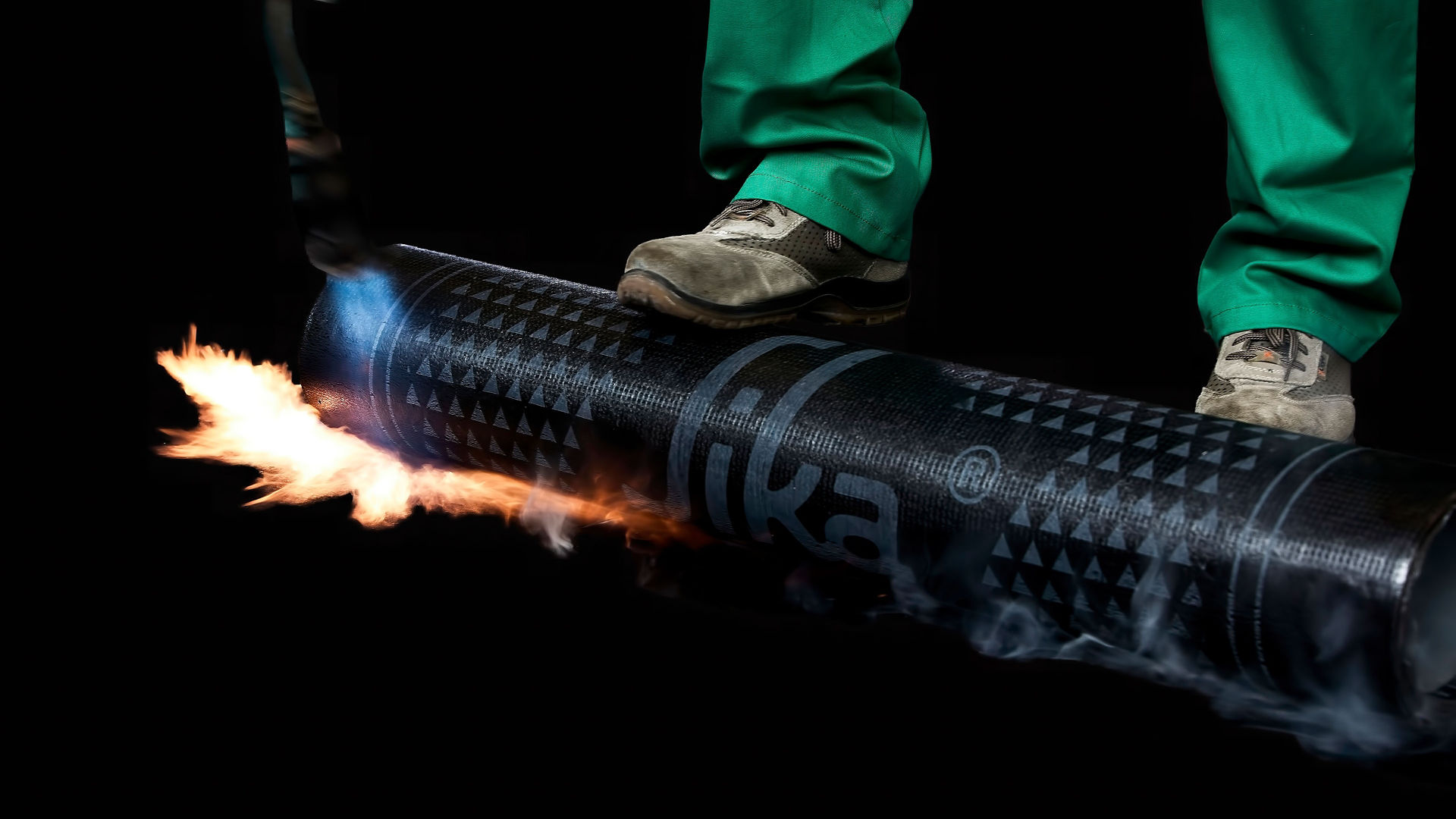
Modified Bitumen Roof Systems in Austin, TX
Modified bitumen is the dominant system on Austin's downtown mid-century commercial buildings, the Congress Avenue corridor properties, the hospitality blocks near the Convention Center, and the older mixed-use buildings in the Rainey Street district. We assess, recover, and replace mod-bit systems with the torch and self-adhered methods appropriate for each building.
Modified bitumen roofing became the upgrade path from built-up roofing in the 1980s and 1990s. In Austin, that transition was particularly pronounced on the downtown commercial inventory, the mid-rise office and hospitality buildings on and near Congress Avenue that were built in the 1960s through 1980s got re-roofed with mod-bit systems through the 1985 to 2005 period. A significant portion of that downtown mod-bit install base is now 20 to 35 years old and either approaching the end of its warranted life or already past it.
Modified bitumen comes in two primary formulations: APP (atactic polypropylene), which is torch-applied and produces a stiff, dimensionally stable membrane suited to Austin's thermal range; and SBS (styrene-butadiene-styrene), which remains flexible at low temperatures and can be torch-applied, hot-mopped, or cold-applied with adhesive. In Austin's climate, where temperature extremes matter less than sustained UV intensity and summer heat, APP torch-applied is the more common specification. SBS self-adhered systems have grown in application because they eliminate torch work in urban environments where open-flame permitting and fire watch requirements add project cost.
The Rainey Street corridor and the blocks immediately north of the Convention Center have a concentration of pre-2000 commercial buildings where mod-bit systems are the current roof assembly. We have assessed buildings in this submarket and understand both the logistical constraints of working on occupied urban properties and the typical failure modes of mod-bit systems in this age range.
Torch-Applied vs. Self-Adhered: Which Method for Austin Buildings
Torch-applied APP is the traditional mod-bit installation method and produces a durable, well-adhered membrane when executed by experienced crews. The limitation in Austin's downtown environment is open-flame permitting. The City of Austin's fire code requires hot-work permits for torch operations, and some downtown buildings, particularly those in close proximity to the Texas State Capitol grounds or adjacent to occupied hospitality properties, have scheduling or insurance constraints that limit when torch work can proceed.
Self-adhered SBS mod-bit systems eliminate the torch entirely. The membrane has a factory-applied adhesive backing that bonds to the substrate under pressure and heat from the sun. In Austin's summer temperatures, self-adhered systems activate quickly; in winter, the cooler ambient temperature requires supplemental warming at the lap area. For downtown Austin buildings where torch permitting is complicated, self-adhered is frequently the right call even though installed cost is modestly higher per square than torch-applied.
Cold-applied SBS with adhesive is a third option for buildings where both torch work and heat-activated self-adhered are problematic, typically fully occupied buildings with tenant sensitivity to fumes. Adhesive-applied mod-bit produces adequate adhesion for most applications but is less common in Austin commercial work than torch or self-adhered.
Assessing Aging Mod-Bit on Downtown Austin Buildings
The primary failure modes on aging downtown Austin mod-bit systems are surface granule loss, alligatoring of the cap sheet surface, flashing delamination at parapets and penetrations, and lap seam failure from sealant degradation. Surface granule loss on the cap sheet is the most visible indicator, granules protect the bitumen from UV degradation, and granule loss accelerates surface oxidation. A cap sheet that has lost granules across more than 30 percent of its surface is at the end of its effective service life regardless of whether it is currently leaking.
Flashing delamination is the active leak risk on aging mod-bit. Bituminous flashings at parapet walls and curbs lose adhesion over time and pull away from the wall surface, the gap between the flashing and the wall is a direct water path into the building. We document every delaminated flashing with photo and measurement. If delamination is localized, targeted flashing replacement can extend the system. If it is distributed across the parapet perimeter, full flashing replacement typically makes more economic sense than piece-work repair.
Moisture core sampling under an aging mod-bit system on a downtown Austin building often reveals more saturated insulation than the surface condition suggests. The dense urban environment means these roofs have limited natural drainage assistance, standing water after rain events is common on flat downtown roofs with interior drain systems that have accumulated decades of debris. We sample cores at both drain areas and mid-field locations to characterize the insulation condition distribution.
Mod-Bit Recover and Replacement on Austin Downtown Properties
Recovering over an existing mod-bit system, laying new TPO or a new mod-bit cap sheet over the existing assembly, eliminates tear-off cost and the logistical complexity of disposing of old bituminous material on a downtown urban property where dumpster staging space is constrained. For buildings where insulation is predominantly dry and the existing assembly is mechanically attached, a recover extends asset life 15 to 20 years at significantly lower cost.
Full replacement on a downtown Austin property requires a tear-off and disposal logistics plan. Dumpster placement on Congress Avenue, 2nd Street, or the Rainey Street corridor requires City of Austin right-of-way permits and off-peak scheduling. Crane picks for material staging on mid-rise properties require coordination with adjacent property owners and, in some cases, lane closures permitted through Austin Transportation Department. We handle these logistics as part of project setup, they are not surprises on our invoices.
Austin's storm season adds urgency to both recover and replacement scopes on aging downtown mod-bit. A mid-century commercial building with 30-year-old mod-bit and known delaminated flashings is at meaningful risk in the Memorial Day and October storm windows that Austin's convective climate regularly produces. The cost of emergency dry-in on a downtown building where crane access is complicated is substantially higher than the cost of replacing the failing flashing before the storm season.
Can modified bitumen be coated to extend its life?
Yes. A properly prepared mod-bit cap sheet surface can receive a fluid-applied coating, typically silicone or acrylic, that restores UV resistance and extends service life 10 to 15 years at significantly lower cost than replacement. The substrate must be cleaned, granule-loss areas primed, and open laps or delaminated flashings repaired before coating. Coating over a mod-bit system with unrepaired active leaks produces a sealed surface above the leak rather than a repair; we assess and repair the substrate before recommending coating.
Does torch work require special permitting in downtown Austin?
Yes. Austin Fire Department requires a hot-work permit for open-flame operations on commercial roofs. In some cases, specific buildings or blocks have additional insurance-driven fire watch requirements, a fire watch attendant present during and for an hour after torch operations. We pull the hot-work permit as part of project setup and include fire watch in the project plan where required. For buildings where torch permitting is problematic, self-adhered SBS eliminates the issue.
How does Austin's temperature range affect modified bitumen performance?
APP torch-applied mod-bit is formulated to remain stable across a wide temperature range and performs well in Austin's climate, where winter lows rarely drop below 20°F and summer highs push 110°F ambient. SBS is more flexible at low temperatures but the flexibility advantage is less relevant in Austin than in northern climates. The primary climate stress on Austin mod-bit is sustained UV intensity and summer surface temperature, both are managed by granule quality on the cap sheet and by keeping the surface clean of debris that traps heat.
Get a modified bitumen assessment or replacement scope for your Austin downtown building.
If your downtown Austin building has an aging mod-bit system, we will walk the roof, assess flashing condition and insulation saturation, and give you a written scope that distinguishes repair from recover from full replacement.
Leak points, drainage, seams, penetrations, edge metal, roof access, and interior risk should be clear before the next roof decision is priced.
Immediate repair, maintenance, coating, recover, and replacement choices should be measured against roof age, moisture risk, tenant disruption, and budget timing.
A site visit is useful when the owner needs a documented roof condition, active leak response, storm review, or a clearer capital plan.