
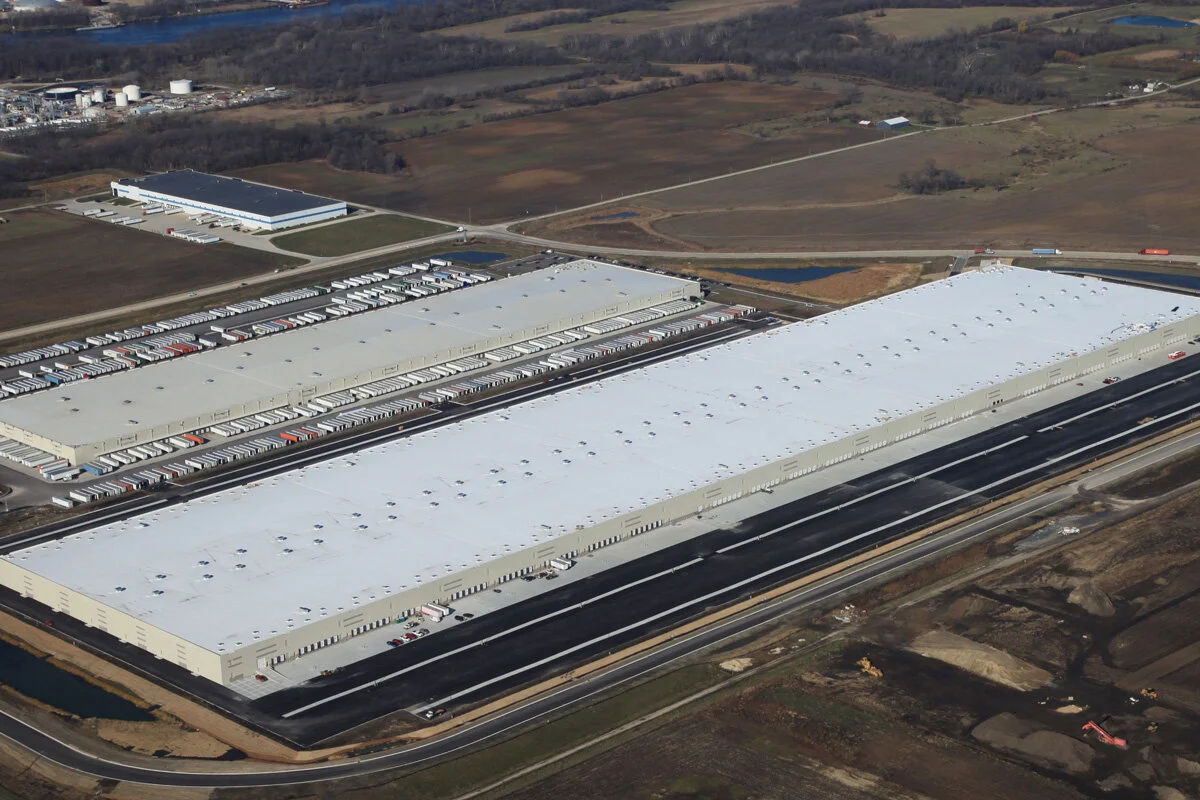
Distribution Center Roofing in Austin, TX
Del Valle's SH 130 corridor is Austin's primary distribution center submarket, large-deck tilt-wall buildings with 24/7 freight operations that cannot be paused for roof work. We scope and replace large-format flat roofs without shutting down the operations inside.
The Del Valle distribution center corridor, from the SH 71 interchange south along SH 130 to Bastrop County, absorbed a significant portion of Austin's logistics real estate growth following the toll road's completion. Buildings in this corridor range from 200,000 to over 1,000,000 square feet of single-story tilt-wall construction with flat TPO or modified-bitumen roofs on open steel deck. Amazon, Home Depot, and other national third-party logistics operators have facilities in this corridor, buildings designed for 24/7 inbound and outbound freight operations.
Distribution center roofing is operationally constrained in ways that most commercial projects are not. A fulfillment center processing 50,000 packages per day cannot shut down inbound and outbound dock operations for roof work. The crane that lifts materials onto the roof cannot block the truck lanes feeding the dock doors. Material staging cannot occupy the fire lanes around the building. Tear-off debris cannot fall into open dock bays where employees are working.
The SH 130 corridor's location east of I-35 puts it in a higher-wind-exposure zone than central Austin, open terrain in multiple directions and highway adjacency places many buildings in IBC Exposure Category C for wind-uplift design. Fastener patterns for insulation and membrane attachment in Exposure C buildings are more conservative than standard Austin commercial specifications. We design attachment patterns to the building's actual exposure classification, not to a generic Austin-average assumption.
Large-Deck Replacement Without Operational Shutdown
A 500,000 sq ft distribution center roof replacement is a multi-week project that must run parallel to full building operations. Our production sequence for large-deck distribution centers divides the roof into 25,000 to 40,000 sq ft production zones, each completed, tear-off through membrane and dry-in, within a single production day. No zone is left open at end of shift.
Dock access is the critical constraint. We map every dock door on the building before finalizing the crane and staging plan, identify which dock clusters are highest-traffic, and position cranes at building sections where staging does not block primary freight lanes. For buildings where the entire dock face is active, crane picks are scheduled in freight traffic gaps, early morning or overnight, rather than during peak receiving hours.
Fire lane compliance is non-negotiable on any occupied building. We stage materials inside the building's property boundary at approved lay-down zones coordinated with the facility's safety team. Dumpsters for tear-off debris are positioned to maintain the required minimum fire lane clearance at all times. We review the site plan with the facility's safety manager before finalizing the staging layout.
Tilt-Wall Parapet and Coping Maintenance
Tilt-wall construction, the dominant building type in the Del Valle distribution corridor, has a specific chronic maintenance issue at the parapet wall-to-coping interface. Metal coping caps on tilt-wall parapets expand and contract with ambient temperature changes. Austin's temperature range, from sub-freezing nights in January to surface temperatures above 160°F on summer afternoons, means the coping joints on a 10-year-old tilt-wall building have cycled through thousands of degrees of movement. Caulk at the coping joints typically fails within 5 to 8 years, allowing water to enter at the parapet and track down the interior wall face.
Distribution centers with interior rack systems that are flush to the exterior walls are particularly vulnerable to coping infiltration, water tracking inside the tilt-wall panel can damage racking uprights and inventory without producing a visible interior ceiling drip until the damage is already significant. Our scope walks on tilt-wall distribution buildings always include systematic parapet and coping inspection, not just membrane condition review.
24/7 Operations and Night-Shift Roofing
Some Del Valle distribution centers operate three shifts with no operational window during daylight hours. For facilities where daytime production is not feasible, where dock activity peaks during the day and the facility's operations team cannot accommodate crane and staging logistics in the freight lane, we can mobilize a night-shift crew for the tear-off and dry-in phases.
Night-shift production on a large distribution center requires additional lighting, we bring tower lights for the production zone, and coordination with the facility's night security protocol to ensure crew access and staging are authorized through the building's security system. Weather monitoring is more critical at night when storm radar requires active watching rather than visual observation of approaching weather.
How do you stage materials on a distribution center without blocking dock access?
Pre-project: we map every dock door, identify the highest-traffic receiving and shipping clusters, and designate a lay-down zone at the building end with lowest dock activity or at an unused property corner. Crane picks are scheduled in traffic gaps for buildings where no staging option avoids all dock exposure. The staging plan is reviewed and approved by the facility's safety manager before mobilization, not decided on the morning of first delivery.
Does the SH 130 corridor require different wind-uplift design than central Austin?
Typically yes. Open terrain east of I-35, highway adjacency, and building height combine to produce Exposure C classification on many Del Valle corridor buildings. Exposure C requires tighter fastener spacing in the field and at the perimeter and corner zones of the roof, per IBC 2021 wind-uplift tables. We calculate the applicable zone pattern for each building based on the building's dimensions, height, and exposure, we do not apply a generic Austin pattern to buildings that fall in a higher-exposure category.
Can you do emergency repairs on a distribution center that is running 24/7?
Yes. Storm damage that needs same-day temporary dry-in is exactly when having a contractor who knows your building already matters. We can mobilize for emergency patching and dry-in on short notice.
Schedule a distribution center roof assessment in Del Valle or Austin.
We cover the full SH 130 logistics corridor and Travis County distribution market. Large-deck assessments include tilt-wall parapet documentation and Exposure C wind-uplift evaluation.
Leak points, drainage, seams, penetrations, edge metal, roof access, and interior risk should be clear before the next roof decision is priced.
Immediate repair, maintenance, coating, recover, and replacement choices should be measured against roof age, moisture risk, tenant disruption, and budget timing.
A site visit is useful when the owner needs a documented roof condition, active leak response, storm review, or a clearer capital plan.