
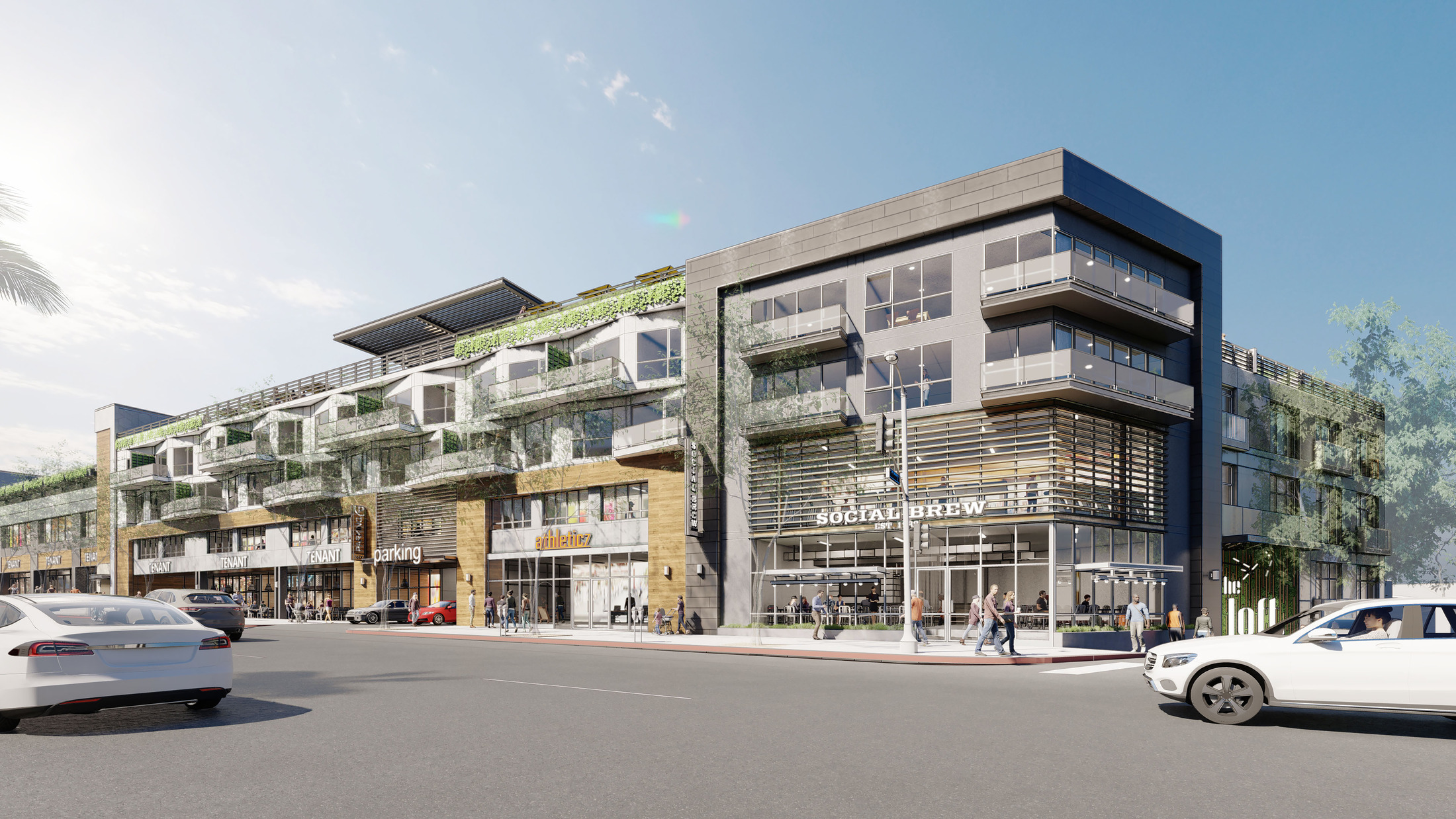
Mixed-Use Development Roofing in Austin, TX
Commercial roofing for mixed-use buildings, urban infill developments, and live-work-play properties throughout Austin, TX.
Austin's rapid growth has made mixed-use development the default building type for most urban infill parcels, with the Domain, the East Riverside corridor, South Congress, and the Second Street District all generating stacked retail-residential or retail-office buildings at a pace that has placed severe demand on the commercial roofing trade. The city's compatibility standards, which limit building height based on adjacency to single-family residential zones, have produced a distinctive building type: podium structures that maximize floor-plate efficiency while stepping down at edges, creating complex multi-level rooflines that require roofing details at every step change. Each of these transitions, where a six-story residential block meets a one-story retail pavilion, is a potential water infiltration point that must be engineered and installed with precision, not improvised by a contractor whose experience is primarily in straightforward single-slope commercial work.
Austin's climate presents a challenge that many building owners from more temperate markets underestimate: the combination of extreme summer heat, occasional flash flooding from intense convective storms, and a meaningful freeze season that produces ice storms roughly every two to three years. The February 2021 winter storm event demonstrated with devastating clarity what happens when building envelopes designed for the predominant heat and rain climate are stressed by prolonged subfreezing temperatures, roof membranes contracted beyond their design flexibility, flashings separated from substrates, and in several mixed-use buildings, frozen pipes created secondary roof damage when they burst and water found paths through existing membrane deficiencies. The lesson for Austin mixed-use roofing is that low-temperature membrane flexibility must be a specification criterion even in a market that considers itself a warm-weather city.
The tech-driven apartment leasing market in Austin has made rooftop amenity decks essentially mandatory on any Class A mixed-use building. The rooftop pools, outdoor kitchens, lounge areas, and event spaces that Austin apartment developers compete on require waterproofing assemblies that can support permanent heavy fixtures, accommodate concentrated loads from planters and water features, and remain watertight under continuous occupancy. The structural deck beneath an Austin rooftop amenity space is typically designed by the structural engineer of record to specific loading criteria, and the roofing contractor must verify that any equipment, planter, or furniture addition post-construction does not exceed those design loads. Building managers who allow tenants to bring unauthorized heavy items onto rooftop amenity spaces are exposing the building to structural risk that the original design did not anticipate.
Adaptive reuse projects in Austin, the Seaholm Power Plant development on West Sixth, the conversion of the Zilker Park area's historic industrial buildings, and numerous East Austin warehouse-to-office conversions, require roofing contractors to work with structural systems that predate modern energy codes, waterproofing standards, and occupancy expectations. These buildings often have parapet walls with no through-wall flashing, roof drains connected to storm sewer systems that may not meet current capacity requirements, and legacy roof assemblies that contain decades of repair layers. A pre-construction condition assessment that includes structural deck probing, infrared moisture scanning, and drain flow testing is not an optional expense on these projects, it is the baseline documentation needed to establish a defensible project scope and a contract price that reflects the actual condition of the existing system.
The Austin Energy Green Building program and the city's voluntary green building rating system have made vegetated roofs a familiar feature on mixed-use buildings seeking higher certification tiers. Beyond the rating system points, vegetated roofs provide genuine operational value in Austin's climate: they reduce rooftop surface temperatures that would otherwise drive cooling loads in the commercial and residential floors below, they manage stormwater retention in a watershed that the City of Austin's Watershed Protection Department actively regulates, and they extend the service life of the underlying waterproofing membrane by shielding it from UV radiation and thermal cycling. A vegetated roof system requires a structural deck designed for the saturated media weight, typically ten to twenty-five pounds per square foot depending on media depth, and a root barrier specification that has been tested against the specific plant species planned for the installation.
Austin's mixed-use building market includes a significant population of transit-oriented developments tailored to Project Connect light rail stations and the existing MetroRail corridor. These buildings are designed for high-density occupancy at nodes where pedestrian activity is concentrated, and reroofing them during occupied operation requires managing construction logistics in environments where normal staging areas do not exist and where street-level activity limits crane pick windows. The roofing contractor must submit a detailed logistics plan to the City of Austin's Right-of-Way Management Division if any crane or material delivery operations affect the public right-of-way, and this permitting process typically requires three to four weeks minimum, time that must be built into the pre-construction schedule before a notice to proceed is issued.
Fire-rated assembly requirements in Austin mixed-use buildings are governed by the Texas State Fire Marshal's Office standards as adopted by the City of Austin Building Services Department. Type III and Type V wood-frame construction over Type I concrete podiums, a building type common in Austin's mid-rise mixed-use market, creates particularly demanding fire separation requirements at the podium-to-wood-frame transition, because the code treats this interface as the critical fire-rated boundary protecting the lower commercial occupancy from a fire that originates in the residential floors above. The roofing contractor's scope at this interface typically includes installing the fire-rated membrane assembly that closes the horizontal plane, and any deviation from the listed assembly detail, even a penetration sealed with the wrong firestop product, requires a formal code variance from Austin Building Services.
Noise and vibration management during reroofing in Austin's dense urban corridors is a tenant relations challenge that building managers consistently underestimate. In a market where Austin's ordinance noise levels limit construction activity to specific hours and prohibit particularly disruptive operations before 7 AM or after 6 PM on weekdays, roofing contractors must compress their work schedules around both regulatory limits and tenant operating hours. For buildings along the East Sixth Street entertainment corridor or near Rainey Street, the tenant mix may include bars and restaurants whose peak revenue hours extend well into the evening, creating a practical constraint that is more restrictive than the city ordinance. The project schedule must be tuned to actual tenant operating patterns, verified by direct communication with building management, not assumed from the building's listed use category.
Long-term maintenance agreements for Austin mixed-use roofing assemblies should be structured with climate-specific triggers: a mandatory post-hail inspection within thirty days of any documented hail event, a post-freeze inspection within sixty days of any sustained subfreezing period of more than forty-eight hours, and a post-storm inspection within thirty days of any rainfall event exceeding four inches in twenty-four hours. The agreement should specify both inspection scope and repair response time commitments, with a tiered response protocol that authorizes emergency repairs without committee approval when active water infiltration is confirmed. Austin's rapid real estate appreciation means that deferred maintenance on mixed-use roofing assemblies depresses property values at a rate that consistently exceeds the cost of proactive repair.
Leak points, drainage, seams, penetrations, edge metal, roof access, and interior risk should be clear before the next roof decision is priced.
Immediate repair, maintenance, coating, recover, and replacement choices should be measured against roof age, moisture risk, tenant disruption, and budget timing.
A site visit is useful when the owner needs a documented roof condition, active leak response, storm review, or a clearer capital plan.