
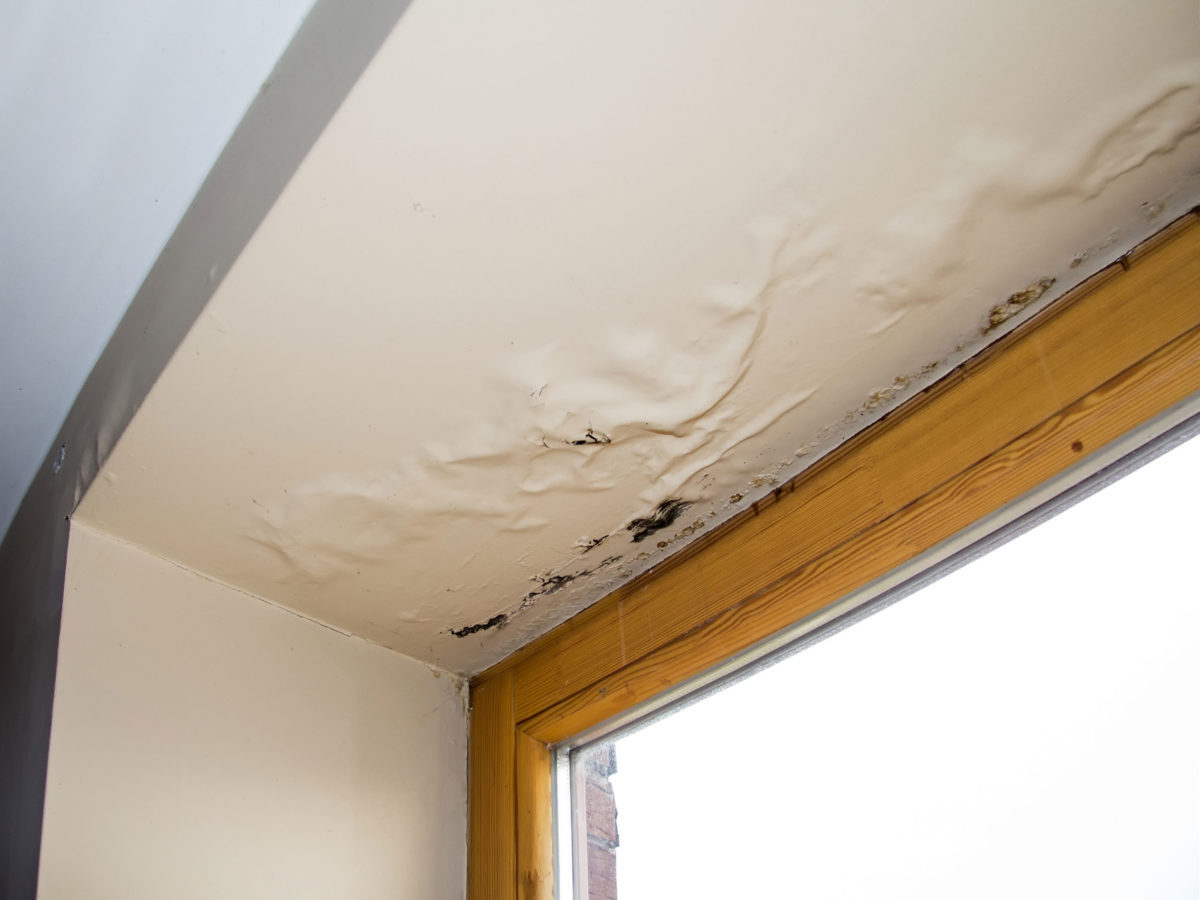
Humidity & Moisture Damage Roof Repair in Austin, TX
Repairing Humidity and Moisture Damage on Austin Commercial Roofs
Not every wet roof in Austin is leaking from the top. A large share of the moisture damage we repair on commercial buildings here started inside the building and worked its way up into the roof assembly, where it got trapped and slowly cooked the insulation. That is a different problem than a hole in the membrane, and it gets misdiagnosed constantly. A property owner sees a soft spot or a ceiling stain, assumes a leak, patches the membrane, and watches the problem come right back because the water was never coming from outside in the first place. We diagnose and repair humidity-driven roof damage by treating the roof as an assembly that has to manage vapor, not just shed rain.
Austin makes this failure mode common. Our long, humid warm season pushes a lot of water vapor into the air, and the buildings that generate the most interior humidity are everywhere in this market: restaurants and commercial kitchens across the downtown and East Austin dining corridors, laundries and food processing in the flex space off US-183 and in the Walnut Creek industrial pockets, indoor agriculture and natatoriums, and any conditioned warehouse near the SH-71 logistics zone running high internal loads. When that interior vapor reaches a cold roof deck or hits a failed vapor barrier, it condenses inside the roof, and the damage begins where nobody can see it.
How Interior Humidity Destroys a Roof From the Inside
Warm, moist interior air wants to move toward the cooler, drier conditions above the roof. On a properly built roof a vapor retarder stops that migration before the moisture reaches the insulation. When that retarder is missing, was never specified, or has been breached by years of penetrations and repairs, the vapor keeps rising until it hits a surface cold enough to condense on, often the underside of the membrane or the top of the deck. There it turns to liquid water and stays, because the membrane that keeps rain out also keeps that trapped vapor from drying outward. Over time the insulation soaks, loses its R-value, and the assembly starts to come apart from within.
The visible symptoms follow a recognizable progression, and we read them as clues to what is happening underneath:
- Blistering: moisture and trapped air expand under the membrane or between plies as the Texas sun heats the roof, pushing the surface up into raised bubbles that eventually rupture.
- Ridging: moisture wicks into insulation board joints and seams, swelling them so the membrane telegraphs long, raised lines across the field of the roof.
- Saturated insulation: the boards turn spongy and dark, lose their thermal value, and feel soft underfoot, which is the core of the damage and the part a surface patch never touches.
- Interior staining and mold: condensate eventually finds its way back down to the deck and ceiling, mimicking a roof leak even when the membrane is intact.
Finding the Moisture Before We Touch the Membrane
Because humidity damage hides inside the assembly, the first job is mapping where the water actually is. We use moisture surveys, infrared scanning, and targeted test cuts to outline the saturated zones and distinguish trapped interior condensation from genuine top-down leaks. That distinction changes everything about the repair. A roof that is wet in a broad pattern unrelated to any penetration is almost always a vapor-drive problem, while moisture concentrated around a single curb or drain points to a breach. Getting that diagnosis right is what keeps us from doing the classic Austin repair that fails twice, where someone reseals the surface again and again while the real driver keeps pumping vapor into the deck.
What an Effective Repair Looks Like
Real humidity-damage repair removes the wet material and addresses the vapor pathway that created it. Patching over saturated insulation traps the water under new membrane and lets the rot spread, so we cut out the saturated boards down to a dry, sound substrate and replace them with new insulation that brings the R-value back. Then we rebuild the assembly so vapor cannot repeat the cycle, which usually means restoring or adding a properly detailed vapor retarder on the warm side of the insulation and reworking the penetrations and terminations where vapor has been sneaking through. The membrane goes back last, over a dry and corrected assembly, instead of being asked to hide a problem.
Drying, Ventilation, and the Vapor Barrier
Sometimes the membrane is sound and the right move is to dry the assembly rather than open large areas of it. Where that is viable we use venting strategies that give the trapped moisture a path to escape, paired with corrected detailing so new vapor cannot replace what we removed. On many Austin buildings the durable fix is part roofing and part building science: the roof scope has to be coordinated with how the space below is conditioned and exhausted, because a commercial kitchen or laundry that dumps unmanaged humidity into the plenum will overwhelm any roof eventually. We flag those interior drivers when we find them so the repair actually holds.
Why This Matters More Here Than People Expect
Owners tend to underestimate humidity damage because it is silent. There is no dramatic drip during a storm, just a gradual loss of insulation value, rising cooling bills as wet insulation stops insulating, and an assembly quietly failing under an intact-looking membrane. In Austin's climate, with the cooling season long and the interior moisture loads high, that slow failure runs faster than owners expect. Catching it while it is a contained area of wet insulation means a cut-out and a vapor-barrier correction. Missing it until the saturation has spread across the field means a full tear-off. The cost gap between those two outcomes is the reason we push to diagnose moisture problems early and correctly.
The buildings most prone to humidity damage are exactly the ones that cannot shut down, the working kitchens, processing facilities, and conditioned warehouses across the metro. We sequence cut-outs and dry-ins so the interior stays protected and operations keep running, never leaving wet insulation buried or the deck exposed overnight. If you are seeing blisters, ridging, soft spots, or recurring stains that come back no matter how many times the surface gets patched, the problem is probably moving the wrong direction, from the inside out. We can map it, tell you whether it is condensation or a leak, and fix the assembly so it stays dry.
Leak points, drainage, seams, penetrations, edge metal, roof access, and interior risk should be clear before the next roof decision is priced.
Immediate repair, maintenance, coating, recover, and replacement choices should be measured against roof age, moisture risk, tenant disruption, and budget timing.
A site visit is useful when the owner needs a documented roof condition, active leak response, storm review, or a clearer capital plan.