
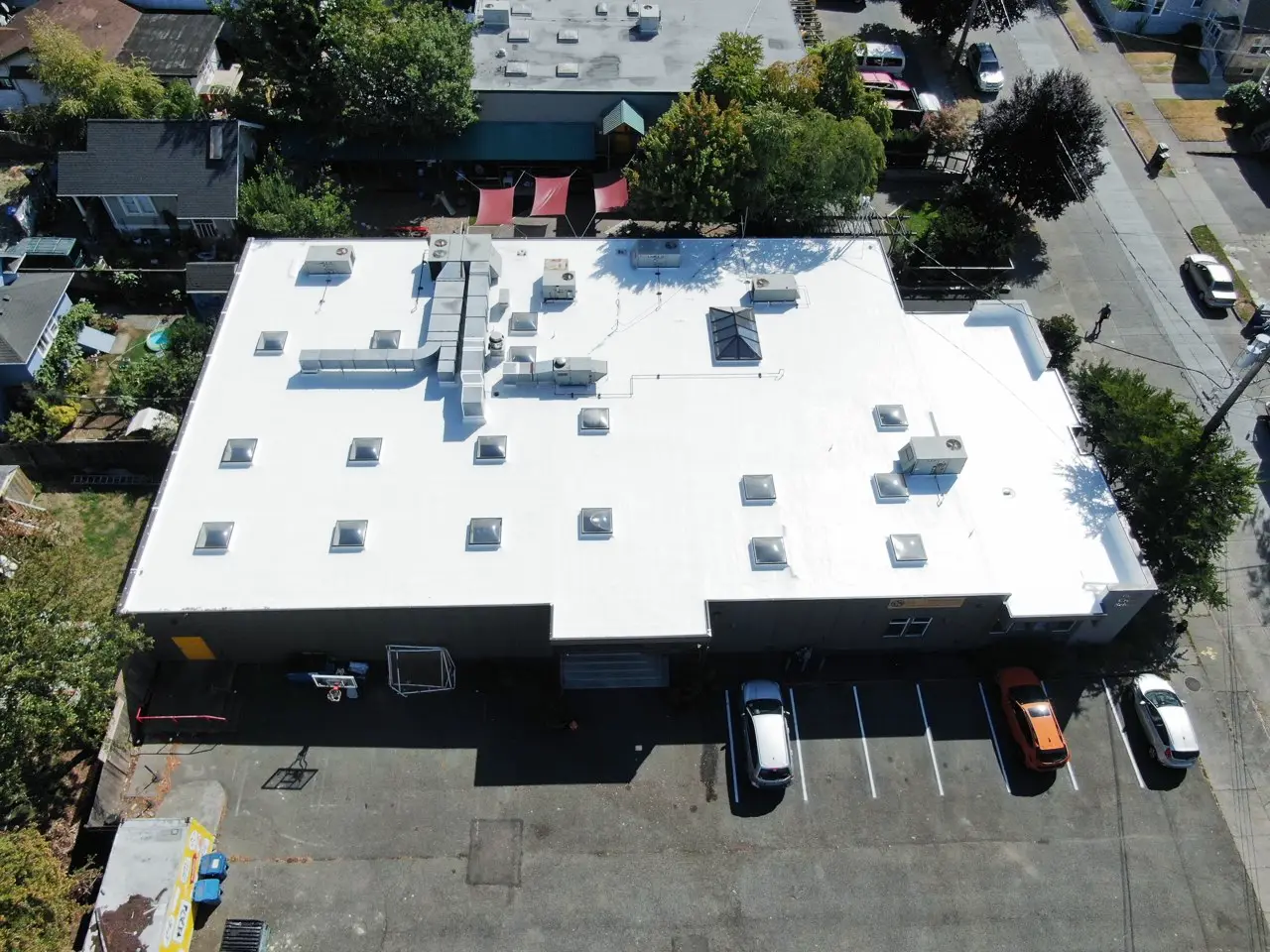
School and K-12 Educational Building Roofing in Austin, TX
Commercial roofing for public and private schools, K-12 campuses, and educational facilities throughout Austin, TX.
Austin Independent School District serves more than 71,000 students across Bastrop, Travis, and Williamson counties, operating one of the largest and most diverse public school facility portfolios in Central Texas. AISD's building inventory spans construction eras from the 1920s through the present day, with roof systems ranging from century-old clay tile on historic neighborhood schools to contemporary TPO membranes on recently constructed elementary campuses. Managing this portfolio in Austin's demanding climate, intense summer heat, spring and fall hail seasons, occasional winter ice events, and the unpredictable weather patterns of the Texas Hill Country transition zone, requires sophisticated capital planning and procurement expertise.
Texas school district summer breaks typically provide eleven to twelve weeks of student-free building access, from late May through mid-August. AISD's facilities and construction services department has refined its summer roofing program over multiple bond cycles to execute projects across numerous buildings simultaneously, using a combination of district-employed project managers and contracted construction management services. The critical discipline that separates effective summer programs from chaotic ones is pre-season preparation: all design, permitting, and material procurement completed before Memorial Day, so that roofing contractors can mobilize within the first week of June and have maximum time before the August return-to-school deadline.
Large flat and low-slope institutional roofs are the dominant form in AISD's building inventory, and the thermal cycling challenges in Austin's climate are more severe than in many peer districts. Summer surface temperatures on dark roofing membranes at AISD campuses regularly exceed 160 degrees Fahrenheit, driving expansion and contraction cycles that work seam welds and flashing sealants aggressively. Texas's energy code cool roof requirements, mandatory for commercial buildings including public schools in Climate Zone 2, are both a code compliance obligation and a genuine operating economics benefit for AISD, whose utility costs represent one of the district's largest non-personnel operating budget items.
Texas prevailing wage requirements under Government Code Chapter 2258 apply to AISD public school construction contracts above the threshold values, and the district's contracts office includes wage schedules in all bid documents for qualifying roofing projects. AISD bond-funded projects are subject to Texas Education Agency construction oversight, and the TEA's facilities division reviews district construction programs for compliance with state requirements including proper prevailing wage implementation. The district's program management team conducts regular certified payroll audits throughout active summer projects to confirm that all workers are receiving the required wage rates.
Multi-building AISD roofing programs are funded through the district's bond programs, most recently the 2017 and 2022 bond authorizations that together provided more than $2 billion for AISD facility improvements. Roofing replacements are among the most consistently funded capital improvements in AISD bond programs because the condition assessment data supporting them is objective, the consequences of deferral are visible and well-documented, and the public credibility of the bond program depends on completing basic facility repairs that voters expected when they approved the measure. AISD's program management office tracks roofing project completion rates and expenditure against bond authorization as part of the program transparency reporting that the district provides to the community.
Austin's dramatic population growth over the past decade has created a highly competitive market for qualified commercial roofing contractors, which generally benefits AISD's procurement process through more competitive pricing. However, growth has also attracted contractors who lack the specific experience that AISD school projects require, Texas prevailing wage compliance, Texas Education Agency reporting, district-required safety plans, and the multi-building coordination complexity of a large summer program. The district's prequalification process filters for relevant public school project experience, and facilities managers should consistently enforce the prequalification requirements rather than allowing emergency circumstances to justify contractor shortcuts.
Occupied school safety for AISD fall and spring roofing work must address the specific traffic patterns of Central Texas school campuses, many of which handle more than 1,000 students arriving and departing multiple times per day. Ground-level exclusion zones below active roofing work must be clearly marked and communicated to transportation staff, who manage bus drop-off and pickup in zones that may be adjacent to building walls where roofing work is occurring. AISD's construction safety coordinator approves all occupied-building safety plans before work begins and conducts unannounced site visits to verify compliance throughout the project.
Asbestos management is a significant consideration for AISD's pre-1980 school buildings, several of which are historic neighborhood schools that carry community landmark status alongside their maintenance challenges. Texas requires that school buildings maintain current asbestos management plans and that any roofing disturbance in areas with known or suspect ACM be preceded by TEA-compliant notification and abatement by a Texas Department of State Health Services-licensed contractor. AISD's environmental health and safety department maintains asbestos management plans for all district buildings and should be included in the pre-bid scope review for any project involving pre-1980 construction.
The long-term stewardship of AISD's bond-funded roofing investment requires a preventive maintenance program that the district has invested in systematically over the past decade. Austin's hail seasons mean that post-storm inspections are a regular maintenance requirement in addition to the standard spring and fall inspections. AISD maintains contracts with roofing inspection consultants who conduct post-storm assessments after any event producing hail above one inch in Travis County, generating the inspection reports and photographic documentation that insurance claims require. This proactive approach has produced several successful storm damage claims that significantly reduced the district's out-of-pocket cost for storm-related repairs.
Leak points, drainage, seams, penetrations, edge metal, roof access, and interior risk should be clear before the next roof decision is priced.
Immediate repair, maintenance, coating, recover, and replacement choices should be measured against roof age, moisture risk, tenant disruption, and budget timing.
A site visit is useful when the owner needs a documented roof condition, active leak response, storm review, or a clearer capital plan.