
Mixed-Use Development Roofing in Austin, TX
One Building, Several Roofs, and a Warranty Map Nobody Drew
Mixed-use is the shape Austin is growing into. Walk the Domain, South Congress, the Mueller development, or the towers going up along East Riverside, and you are looking at buildings that stack ground-floor retail and restaurants under apartments, with parking podiums, amenity decks, and pool terraces layered in between. From the street it reads as one project. From above it is a collection of very different roofs, each with its own assembly, its own use, and very often its own warranty from a different installer working a different phase of construction. Sorting that out is half of what we do on these buildings.
When something leaks in a mixed-use development, the first question is rarely how to fix it. It is whose roof it is, whose warranty covers it, and whether touching it voids someone else's coverage. We come into these buildings able to answer that, because we treat the whole development as the system it actually is rather than as one roof on a drawing.
Retail Podiums, Residential Decks, and the Seams Between Them
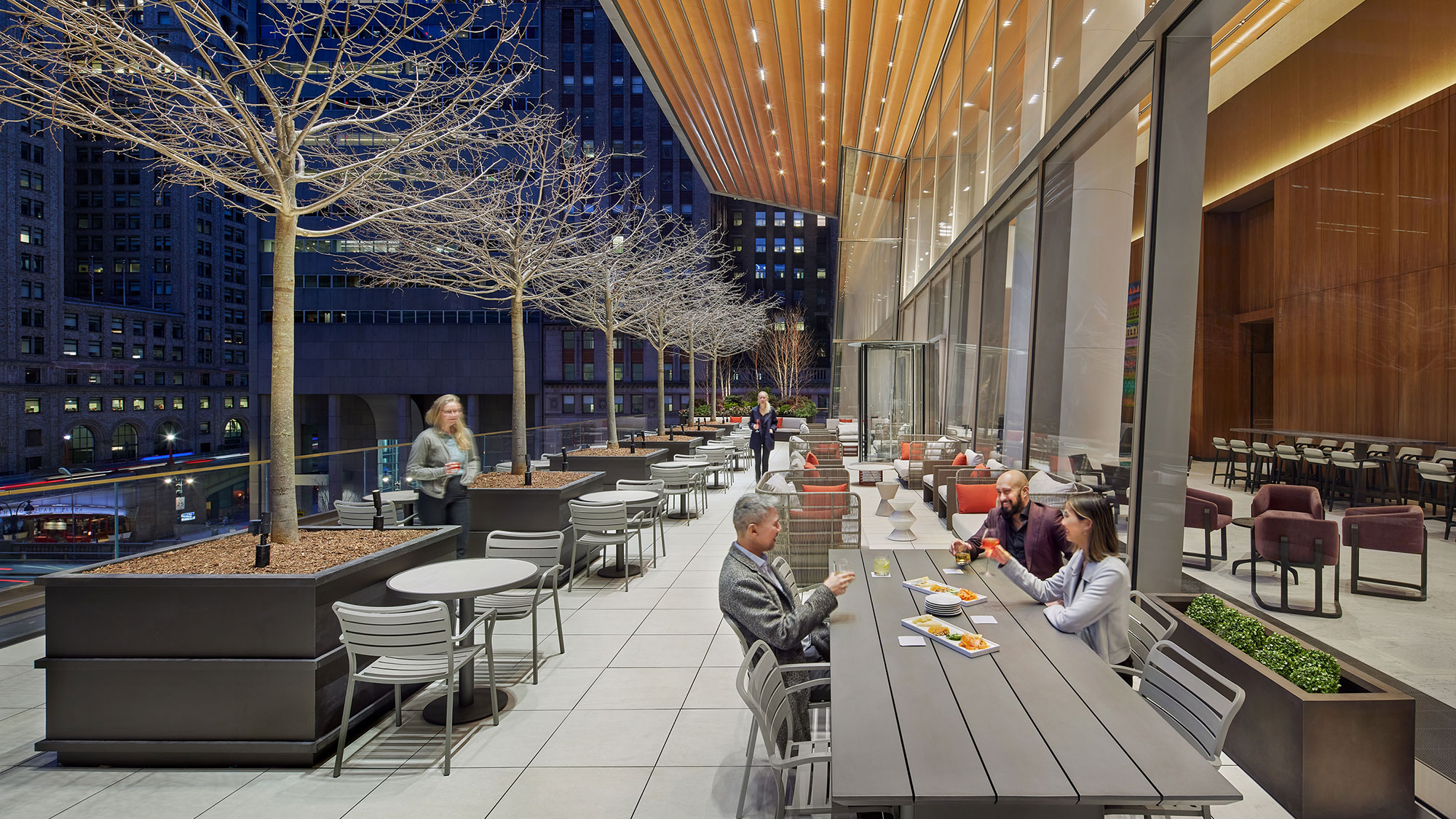
The roof areas in a mixed-use project rarely sit at one level or serve one purpose. A low-slope membrane covers the retail podium. A higher residential roof sits above the apartments. Between and around them are amenity decks people actually walk on, planters and green areas, pool surrounds, and the parking structure below it all. Each is a different roofing problem. The podium behaves like a commercial low-slope roof carrying the residential tower's drainage. The amenity terrace is a plaza deck with waterproofing buried under pavers and landscaping, where a leak is hidden until it shows up in the ceiling of the shop below. The transitions where these areas meet, where a planter wall ties into a membrane or a pedestal-paver deck meets a parapet, are where these buildings leak.
We focus on those transitions because that is where mixed-use roofs actually fail. Tracing a leak under an occupied amenity deck takes patience and the right approach, since water travels a long way under pavers before it appears below. We are methodical about it rather than tearing up half a terrace on a guess.
- Plaza and amenity decks where waterproofing hides under pavers, planters, and pool surrounds
- Podium roofs that carry drainage from the residential floors above into shared retail-level systems
- Transitions and terminations at planter walls, parapets, and the seams between adjoining roof areas
- Mixed assemblies on one building, each installed in a different construction phase under a different warranty
Warranty Coordination Is Part of the Roofing Work
Mixed-use developments are usually built in phases by different trades, and the roofing reflects that. The podium might carry one manufacturer's warranty, the residential roof another, and the plaza waterproofing a third, with the boundaries between them poorly documented. An owner or HOA inherits all of it and often has no clear map of what is covered, by whom, until when. When a repair crosses one of those invisible lines, an uncoordinated fix can void a manufacturer's warranty on an adjoining area and leave the owner worse off than the leak did.
We sort this out before we touch anything. We identify which system covers which area, what each warranty requires, and who needs to be involved to keep coverage intact. Where work touches a system still under manufacturer warranty, we use compatible materials and methods and keep the documentation an owner needs to preserve that coverage. For owners and property managers juggling a multi-system building, having one roofer who maps it all and keeps it straight is worth far more than the lowest bid on a single patch.
Drainage Across Levels in an Austin Storm
Mixed-use buildings concentrate a lot of roof and deck area into a tight footprint, and all of it has to shed water somewhere when an Austin storm comes through hard and fast. Water sheets off the residential roof onto the podium, off the podium toward drains shared with the retail level, and across amenity decks that have to drain without flooding the space people are standing on. We make sure the whole cascade works as a system, with drains and overflows sized for the way it really rains here, so a clogged drain on a planter deck does not back water into an apartment or down into a ground-floor restaurant.
Systems We Install on Austin Mixed-Use Projects
Because the roof areas differ so much, the right answer is usually several systems chosen for each condition and detailed to work together.
- TPO and PVC single-ply for reflective, durable coverage on podium and residential low-slope roofs
- Plaza-deck and pedestal-paver waterproofing under amenity terraces, pool surrounds, and walkable areas
- Liquid-applied membranes for complex transitions, planters, and tie-ins where sheet goods are hard to detail cleanly
- Reflective coatings and restoration to extend service life on aging podium roofs without disrupting the tenants below
Working Over Tenants and Residents at the Same Time
A mixed-use building never empties out. Residents are home at night, retail and restaurants run during the day, and the amenity deck fills on evenings and weekends. We coordinate closely with the property manager and HOA, schedule disruptive work to limit the hit to both residents and businesses, and protect occupied spaces below whenever we open a roof or deck. We keep entrances, patios, and parking access clear, and we communicate ahead so a restaurant's lunch rush or a resident's weekend is not interrupted without warning.
One Roofer Who Knows the Whole Building
The biggest favor an owner of an Austin mixed-use development can do for the asset is to have one roofer who understands every level of it. We put these buildings on a maintenance program that covers all the roof and deck areas together, inspecting twice a year and after major storms, clearing drains across every level, and watching the transitions where leaks start. We document everything with photos tied to specific areas and keep the warranty picture current, so a board or an out-of-town owner always knows the condition and coverage of the entire building. If you manage a mixed-use property anywhere in Austin and want one team that can see the whole roof rather than just one piece of it, reach out and we will walk all of it with you.
Leak points, drainage, seams, penetrations, edge metal, roof access, and interior risk should be clear before the next roof decision is priced.
Immediate repair, maintenance, coating, recover, and replacement choices should be measured against roof age, moisture risk, tenant disruption, and budget timing.
A site visit is useful when the owner needs a documented roof condition, active leak response, storm review, or a clearer capital plan.