
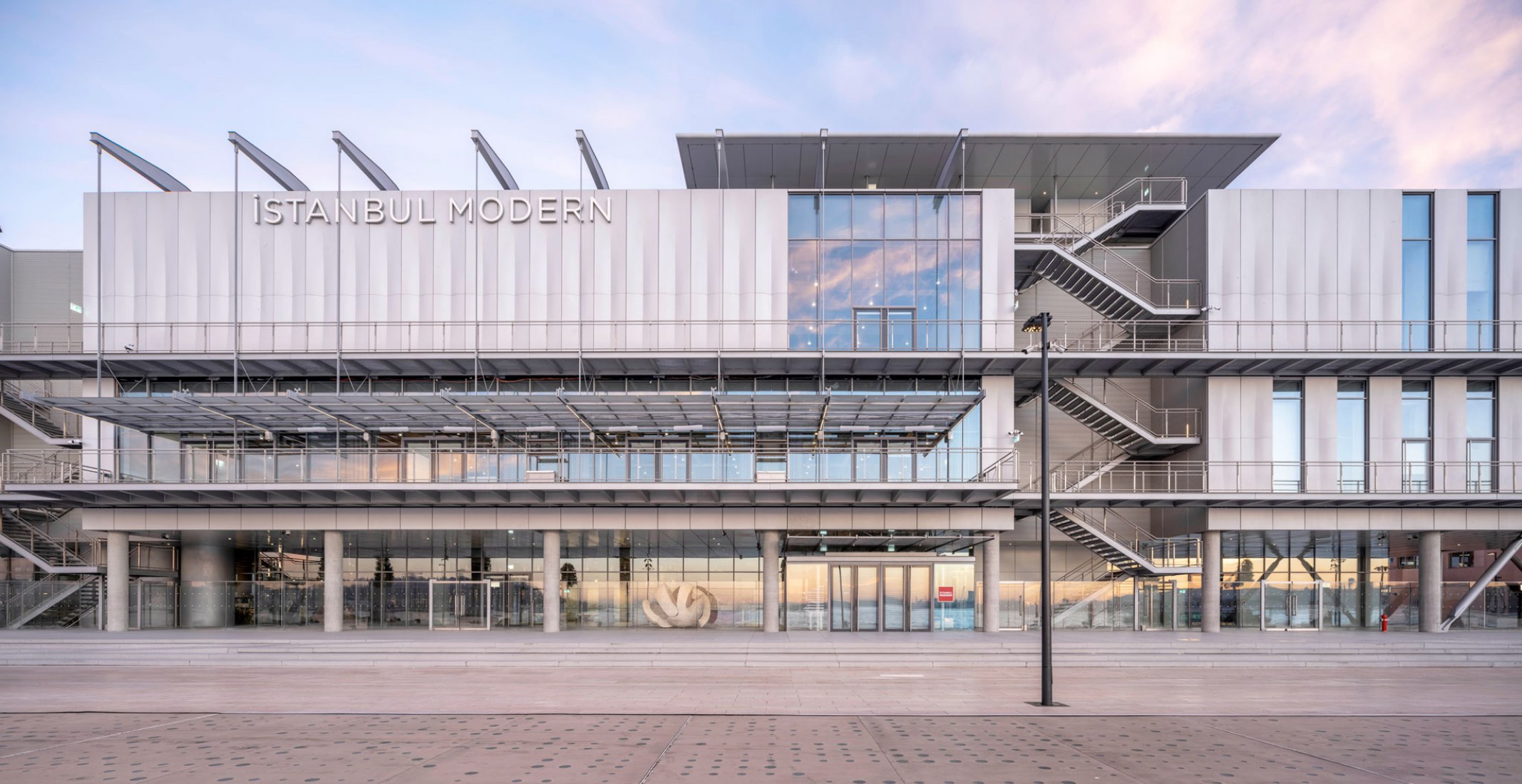
Museum & Cultural Facility Roofing in Austin, TX
Austin's commercial market stretches from the Domain and North Austin tech corridor along US-183 to the South Lamar and East Cesar Chavez redevelopment zones, with major industrial activity in Round Rock and Pflugerville. Museums and cultural institutions in this market require roofing specifications that protect collections from even low-rate moisture infiltration, the standard for museum envelope performance is zero-tolerance, and the phasing, temporary protection, and skylight coordination requirements that achieve that standard are fundamentally different from standard commercial roofing practice.
Museum and cultural institution roofing in Austin requires phased project planning fit to one constraint that overrides scheduling, cost, and convenience: the collection cannot be exposed to moisture. Not even briefly. Artwork, manuscripts, historic textiles, and archival materials can sustain irreversible damage from relative humidity changes that are invisible to the human eye. A re-roofing project that allows even low-rate moisture infiltration into a gallery space causes damage that may not become apparent until months after construction is complete. We treat every gallery and collection storage area as a zero-exposure zone from day one of construction planning.
The phase boundary protocol for museum re-roofing in Austin is the most stringent in commercial construction. Before any membrane tearoff begins over a gallery or collection storage area, temporary weather protection is installed, inspected, and confirmed by the project manager, fully sealed poly over the exposed deck, all laps taped with butyl tape, all edges secured against wind-driven rain. If weather forecast shows more than 10% precipitation probability within 24 hours of the opening a phase boundary, we do not open that boundary. The temporary protection budget is built into every museum roofing proposal as a firm-price line item, not a contingency to be reduced.
The curatorial team's input on phase sequencing is a construction management requirement for museum re-roofing in Austin. Curators know which galleries contain the most moisture-sensitive works, which storage vaults have the most stringent climate requirements, and which exhibit rotations will bring high-value loans into the building during the construction period. We meet with the curatorial team before finalizing the phase plan, not to seek permission, but because they have information that affects the sequence. A re-roofing contractor who doesn't involve the curatorial team hasn't understood what's at risk.
Museum & Cultural Facility Roofing, Operations Questions
Every gallery and collection storage area receives fully sealed temporary weather protection before tearoff begins overhead. The protection is inspected by the project manager and confirmed in writing before tearoff starts. Phase boundaries are sealed with butyl tape and secured against wind-driven rain. If weather is forecast that creates precipitation risk to an open section within 24 hours, we stop opening new sections until the forecast window clears. We document the temporary protection condition with photographs at the start and end of each work day.
Yes, in most cases and with careful phasing. Galleries below active construction sections are closed during overhead work but may remain accessible if work is above a different building wing. Most museum re-roofing in Austin proceeds with portions of the museum open and accessible to visitors. The phasing plan is reviewed with the museum's operations director and curatorial team before mobilization, and the public-facing gallery closures are communicated to visitors in advance.
High-value loan exhibits, works borrowed from other museums or private collections with specific climate and security conditions written into the loan agreement, cannot be in a building with active roofing construction overhead without the lending institution's approval. Before finalizing the construction schedule, we review the museum's upcoming exhibit calendar with the registrar's office and confirm that no loan exhibits will be installed in sections under or adjacent to active construction. Phasing may need to accommodate loan exhibit installation and deinstallation windows.
Before any gallery or collection storage area is re-opened after overhead roofing work, the area undergoes a climate stability confirmation: temperature and relative humidity are monitored for 24-72 hours after construction is complete to confirm that the new roof assembly is providing the climate buffer the collection requires. If temperature or humidity is outside the acceptable range for the collection, the HVAC system is adjusted before the gallery is re-opened. The climate confirmation is documented and retained in the project record.
Museum security systems, motion sensors, door contacts, glass-break sensors, and CCTV, extend to the roof level at many institutions. Construction access to the roof requires coordination with the security director to ensure that contractors are properly registered in the access system, motion sensors in work areas are temporarily masked (with security director approval), and the daily access log correctly reflects contractor entries and exits. We include security coordination as a standard pre-construction deliverable on every museum roofing project.
Commercial roofing for museum & cultural facility roofing in Austin, TX, specifications, scheduling, and project coordination for this building type.
Austin's warehouse inventory, from Del Valle's SH 130 logistics corridor to the East Austin industrial pockets, has added millions of square feet in the last decade. We scope, replace, and maintain large-deck commercial flat roofs sized for the operational demands of distribution and storage use.
Austin's warehouse market expanded significantly when SH 130 opened a viable alternative to I-35 for freight movement through the metro. The Del Valle corridor south of Austin-Bergstrom International Airport has absorbed large-format logistics and fulfillment development, tilt-wall buildings in the 200,000 to 500,000 sq ft range with TPO or modified-bitumen flat roofs on open steel deck. These buildings are now hitting the 7-to-12-year maintenance window where the first membrane decisions need to be made.
East Austin's older warehouse cluster, Airport Boulevard, Springdale Road, and the industrial pockets east of I-35 between MLK and 51st, is a different inventory profile: pre-2000 buildings with built-up roofing (BUR) or modified-bitumen systems that have been patched repeatedly and are often past the recover threshold. Full replacement with TPO is the correct scope on most of these buildings, but the scope decision depends on insulation condition data, not age alone.
Warehouse roofing in the Austin market has two climate variables that drive scope decisions. First, UV load: Austin's high-UV environment degrades uncoated modified bitumen faster than manufacturers' published timelines assume, particularly on roofs with minimal shade and maximum southern exposure. Second, the SH 130 corridor's exposure category, open terrain adjacent to the highway, pushes wind-uplift requirements into Exposure C for many buildings, which tightens fastener pattern density requirements and affects parapet attachment details.
Large-Deck Roof Replacement in the Del Valle Corridor
Del Valle's SH 130 logistics buildings are some of the largest single-roof-footprint commercial projects we scope. A 400,000 sq ft warehouse has a roof that requires phased tear-off and dry-in sequencing, opening the entire deck simultaneously is never the right plan. We divide large decks into 20,000 to 30,000 sq ft production zones, complete tear-off, insulation placement, and TPO membrane installation with same-day dry-in in each zone before moving to the next.
Tilt-wall construction dominates this corridor. The parapet-to-wall interface on tilt-wall panels is a documented chronic leak point, thermal movement at the metal coping cap degrades sealants on a 5-to-8-year cycle regardless of initial installation quality. Our scope walks on Del Valle tilt-wall buildings always include systematic documentation of coping joint condition, through-wall flashing condition, and interior drain leader pipe access. These details drive repair-vs-replace decisions independent of membrane condition.
Loading dock roof overhangs and exterior canopies on large warehouse buildings need separate scoping from the main field. Dock canopies have different drainage geometry, different wind exposure at the building edge, and in some buildings, different deck material than the main field. We scope them separately and include them in the same project when it is logistically practical to sequence the work.
East Austin Warehouse Inventory
The East Austin warehouse cluster predates the SH range from 1970s concrete-frame with aggregate-surfaced BUR systems to early-2000s steel-frame with modified bitumen. The 1970s and 1980s buildings in this cluster are the most common full-replacement candidates, BUR systems past their expected service life, insulation saturated beyond the recover threshold, and deck condition that requires inspection ports before any scope is finalized.
Austin's development pressure on East Austin has added an ownership transition layer: buildings purchased for redevelopment are sometimes in limbo, the owner knows redevelopment is 3 to 7 years out and does not want to invest in full replacement. In those cases, we scope minimum-intervention repairs to keep the building dry through the hold period rather than recommending full replacement that will be demolished. That is the honest scope for the situation.
Operating Constraints on Warehouse Roofing
Active warehouse operations create constraints that standard commercial roofing projects do not face. Forklift traffic through loading bays means crane positioning cannot block dock access without shutting down inbound freight, unacceptable to a 24/7 fulfillment operation. Material staging on the roof must account for live load limits on open steel deck. Roof access during production cannot coincide with rack replenishment operations directly below the tear-off zone.
We develop a construction logistics plan for every active-warehouse project before mobilization: dock access windows, roof staging zone load limits, daily production zone mapping shared with warehouse management the morning before each shift, and a communication protocol for the facility coordinator. The roof crew does not make operational decisions, the plan sets the rules before the project starts.
Can a warehouse roof be replaced while the building is in full operation?
Yes, with a phased sequence and a written logistics plan. We work in zones sized so that no section is open overnight and no zone's production footprint blocks dock access or interior aisles below. The sequence requires daily coordination with facility management, but full closure is not necessary on any warehouse project we have scoped in the Del Valle or East Austin corridors.
What is the right membrane for a large Austin warehouse?
TPO 60-mil is the standard specification for most Austin warehouse replacements, white reflective surface, heat-weldable seams, 20-year NDL warranty path, and good performance in Austin's UV environment. 80-mil is worth the additional cost per square for buildings near the SH 130 corridor with Exposure C wind classification or documented hail history. Modified bitumen recover is sometimes appropriate for buildings with dry insulation and BUR base that are not yet at the replacement threshold.
Does the City of Austin or Travis County require permits for large warehouse re-roofing?
Yes. The City of Austin Development Services Department requires a permit for commercial re-roofing projects. Del Valle properties may fall under Travis County jurisdiction rather than City of Austin jurisdiction depending on the parcel, we confirm the permitting authority during pre-construction setup and pull the applicable permit. Permit timelines in Travis County have run 10 to 20 business days for large commercial projects.
Get a written scope for your Austin warehouse roof.
Our project managers cover the Del Valle corridor, East Austin, and all Travis and Williamson County industrial submarkets. We deliver a written condition report with moisture core data within five business days of the site visit.
Leak points, drainage, seams, penetrations, edge metal, roof access, and interior risk should be clear before the next roof decision is priced.
Immediate repair, maintenance, coating, recover, and replacement choices should be measured against roof age, moisture risk, tenant disruption, and budget timing.
A site visit is useful when the owner needs a documented roof condition, active leak response, storm review, or a clearer capital plan.