
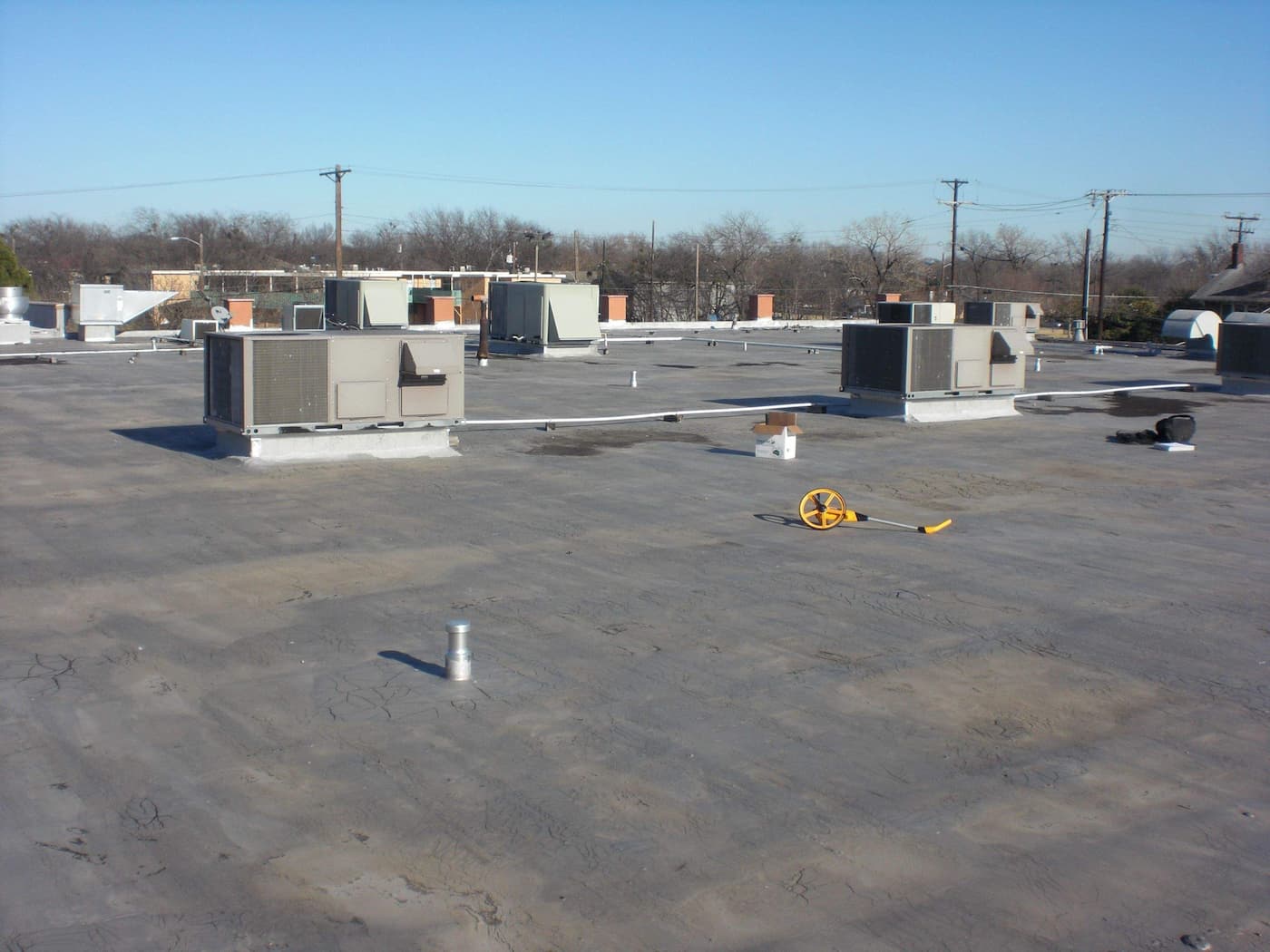
Hail Damage Roof Insurance Claims in Austin, TX
Central Texas sits inside a hail corridor that produces spring supercells most years, and Round Rock, Pflugerville, and north Travis County have taken repeated direct hits in recent hail seasons. On a flat commercial TPO roof, hail damage is rarely the dramatic dented-out damage owners picture. It shows up as shallow surface impressions, membrane compression, and stress points that fail later, which is exactly why the claim documentation has to be built from a close-range roof inspection, not a drive-by look at the parking lot.
We're your roofing contractor, not a public adjuster, we document and substantiate the hail damage so you and your adjuster work from an accurate scope. Our documentation is built specifically around how hail actually damages the membrane systems common on Austin commercial roofs, not a generic storm-damage checklist.
How Hail Damages a Commercial TPO Roof
On 60-mil and 80-mil TPO, hail in the roughly one-inch-and-above range compresses the membrane and the insulation beneath it, leaving a circular depression at the impact point. That impression is often not visible without close-range inspection in low, raking light on a dry surface, from a standing height or a phone-camera drive-by photo, it can look like nothing happened. The real damage is at the membrane level: impact points become stress concentrations where seam separation and surface cracking are more likely to start, sometimes months after the storm rather than immediately.
Because that delayed-failure pattern is well known, thorough hail documentation matters even when a roof isn't actively leaking right after a storm. We map impact density across every section of the roof, including areas that don't look obviously affected, and photograph representative impact points at close range with a scale reference.
Building the Hail Claim Documentation
Our hail assessment produces a GPS-keyed zone diagram showing impact locations across the full roof surface, impact density counted per section, close-range timestamped photography at representative impact points, and a written condition report describing the membrane's remaining serviceable life at the affected zones. Where an adjuster or carrier requires physical evidence beyond photography, we can pull membrane samples at documented impact locations. This is the same format commercial property adjusters expect when they review a hail claim.
We tie the documented damage to a specific, confirmed storm event using National Weather Service data for the Austin/San Antonio forecast area, the hail size, date, and affected geography for the storm in question. Linking your roof's documented damage to a confirmed weather event, rather than an unspecified time frame, is standard practice for Texas commercial hail claims and helps avoid disputes over cause of loss.
Meeting the Adjuster After a Hail Event
Hail claims in this market often come in waves after a single regional storm, and adjusters covering a high volume of roofs in a short window sometimes move faster than a thorough inspection allows. We can meet your adjuster on the roof with our impact-density map and photo log in hand, which gives the inspection a documented starting point instead of a fresh, unguided walkover. If the adjuster's field assessment misses zones we've documented, we can point directly to the location and photograph.
Roof Age, TX Deductibles, and What That Means for Your Claim
Texas commercial policies frequently carry percentage-based wind and hail deductibles rather than a flat dollar amount, and those percentage deductibles can be a meaningful number on a large commercial roof. That's a policy and coverage question for you and your carrier or broker, not something we advise on, but it's a real factor in why getting the full documented scope right matters: a partial or understated claim on a policy with a percentage deductible can leave a property owner covering more of the repair cost than the actual coverage requires. Roof age also affects claims, many carriers apply actual cash value rather than replacement cost on roofs past a certain age, which is again a policy term to review with your insurer.
Hail Claim Questions
How long after a hailstorm can damage still be documented?
Impact impressions on TPO membrane don't disappear on their own, so documentation is possible well after the event. That said, earlier documentation is better, weathering, foot traffic, and additional storms can make individual impact points harder to distinguish over time.
Does every hailstorm in Austin justify a claim?
Not necessarily. Smaller hail may not produce damage that meets a policy's covered-loss threshold. Our assessment tells you what we actually found on your roof so you can make that determination with real information rather than guessing from the storm's reported size.
What if the adjuster's hail count is lower than yours?
We can walk the discrepancy zone by zone against our photo log and impact map. Differences often come down to inspection thoroughness, a systematic zone-by-zone count typically finds more documented impact points than a general walkover.
Get your roof documented after a Central Texas hail event.
Send the roof address and the storm date if known. We'll schedule a close-range impact assessment before your policy's claim-filing window closes.
Leak points, drainage, seams, penetrations, edge metal, roof access, and interior risk should be clear before the next roof decision is priced.
Immediate repair, maintenance, coating, recover, and replacement choices should be measured against roof age, moisture risk, tenant disruption, and budget timing.
A site visit is useful when the owner needs a documented roof condition, active leak response, storm review, or a clearer capital plan.