
Built Up Roofing in Austin, TX
Built-up roofing remains a viable system on many Austin commercial buildings, and a large portion of the pre-2000 commercial flat-roof inventory in Travis County is BUR. We assess, repair, and recover BUR systems, and replace them when repair is no longer the honest recommendation.
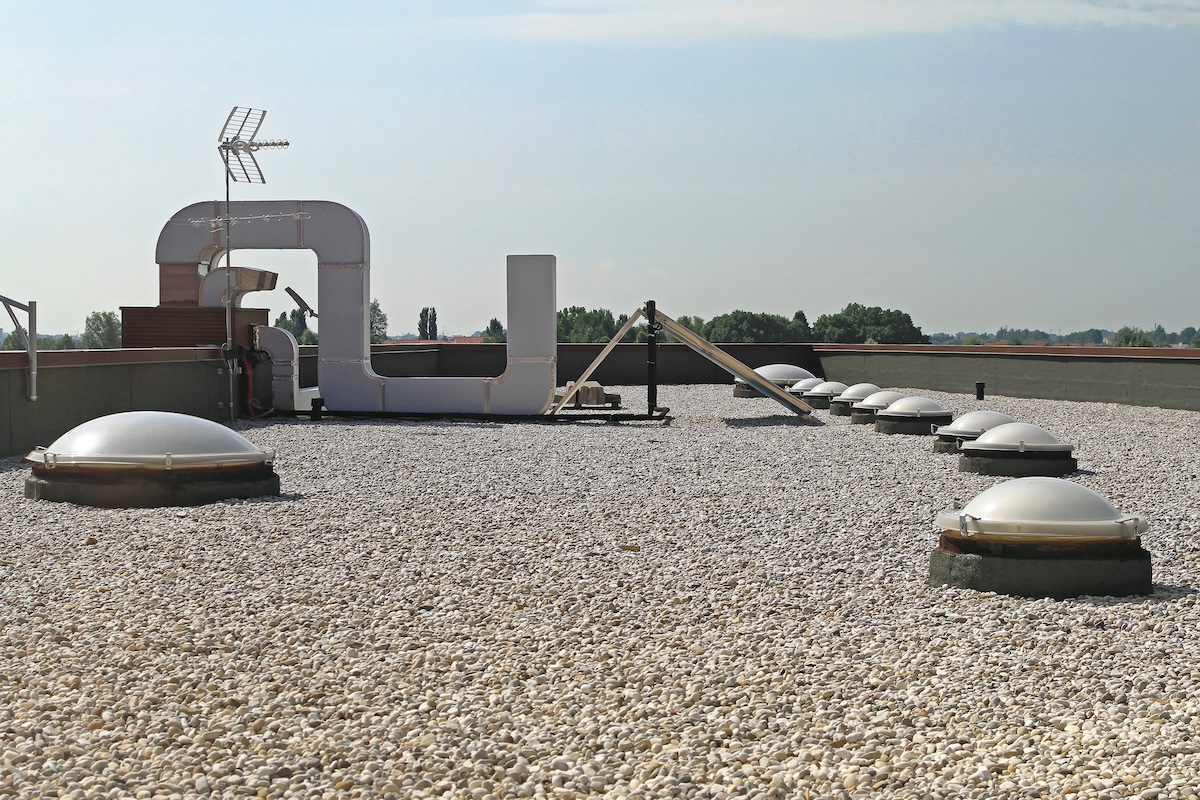
Built-up roofing (BUR), alternating layers of reinforcing ply sheets and bitumen, topped with aggregate or a cap sheet, was the dominant commercial flat-roof system in Austin from the 1950s through the early 1990s. Many of the industrial buildings east of I-35 near the Austin-Bergstrom International Airport corridor, and the pre-renovation commercial inventory in East Austin's older blocks, still carry BUR systems installed before single-ply membranes became the default.
A BUR system in reasonable condition, four-ply aggregate, uncompromised base flashing, functioning drains, can last 30 to 40 years with proper maintenance. The problem in Austin is that many BUR roofs from the 1970s and 1980s are now operating past their design life without maintenance or with a history of reactive patch work that has compromised the system's integrity. Distinguishing a BUR that can be recovered from one that needs full replacement requires core sampling and systematic condition documentation.
Austin's heat accelerates asphalt oxidation in BUR systems. Surface temperatures above 150°F on dark aggregate-surfaced roofs are common during Central Texas summers. Oxidized asphalt becomes brittle, loses flexibility at thermal cycling joints, and begins to crack, the surface pattern called alligatoring, on a faster schedule in Austin's climate than in milder markets. Alligatoring is a condition indicator, not an automatic replacement trigger, but it needs to be assessed against core thickness and insulation condition to give an honest answer on remaining life.
Assessing BUR Condition on Austin Commercial Buildings
Our BUR assessments start with a systematic roof walk documenting surface condition zone by zone: aggregate displacement patterns, alligatoring, ponding evidence, blister locations, base flashing condition at all penetrations and parapets, drain condition, and any visible seam or flashing failure. Every observation gets photographed and keyed to a roof zone diagram.
Core sampling is the critical step. A drill-cut core through the full assembly reveals the number of functional plies remaining, whether the asphalt is oxidized through the full thickness, and whether the insulation below is wet. Wet insulation in a BUR assembly is a near-automatic replacement indicator, trapping moisture under a recovered system voids the recovery warranty and continues degrading the deck on an accelerated schedule.
Buildings in the East Austin warehouse corridor and the Ben White industrial strip often have BUR systems installed over poured gypsum decks, a common mid-century construction approach that eliminates steel deck but introduces a fragile substrate that cannot support the live loads of a modern roof replacement crew without temporary load-spreading. We assess deck type and condition before scoping any BUR replacement on pre-1980 construction.
Repair and Maintenance on BUR Systems
Blisters, raised bubbles in the BUR surface formed by trapped moisture vapor, are the most common BUR repair item on Austin roofs. The correct repair requires cutting the blister open, drying the cavity, removing any delaminated plies, filling with compatible bitumen and ply fabric, and re-surfacing to match the surrounding aggregate or cap sheet. A blister patched with asphalt emulsion and aggregate broadcast over the top is a cosmetic repair that lasts one Austin summer before re-opening.
Flashing repair at penetrations and parapets is the second most common BUR maintenance item. Bitumen base flashings at penetration curbs oxidize faster than the field membrane because they receive reflected heat from the curb and direct traffic impact from maintenance workers. Standard repair is a new ply-reinforced base flashing strip embedded in compatible bitumen, extending at least six inches onto the field membrane and up the curb at full height.
Drain maintenance matters more on BUR roofs than on single-ply systems because aggregate-surfaced BUR sheds small gravel into drain domes every season. Clogged drains on flat Austin roofs produce ponding, which accelerates BUR delamination at seams and flashings. Our BUR maintenance contracts include annual drain inspection and clearing as a line item.
BUR Recover and Replacement Decisions
A BUR recover, installing a new single-ply membrane or modified bitumen cap sheet over the existing BUR assembly, is viable when core sampling shows the existing assembly is dry, the insulation is structurally intact, and the deck can support the additional dead load. The recover eliminates tear-off and disposal costs, which matter on large Austin roofs where the weight of aggregate-surfaced BUR (often 7 to 10 pounds per square foot) makes disposal logistics expensive at the city's landfill tipping fee rates.
Full replacement is the right call when cores show wet insulation, when deck condition is compromised at core inspection points, or when the building has already received one recover layer and is at the code limit for total assembly depth relative to parapet height. The City of Austin Development Services Department enforces the IBC limit on roof assembly layers; we verify the building's existing assembly count before recommending recover as an option.
Modified bitumen cap-sheet recover over existing BUR is a common transitional choice for Austin commercial owners who want to extend the system another 10 to 15 years before a full TPO replacement. The torch-applied or cold-adhesive SBS modified bitumen cap sheet bonds well to clean BUR surfaces and carries manufacturer warranties of 10 to 15 years when installed over documented dry insulation.
How can I tell if my Austin commercial building's BUR system needs replacement or just repair?
Surface condition alone is not sufficient to answer that question. Alligatoring, surface cracking, and blistering are visible indicators of stress but do not tell you whether the underlying insulation is compromised. Core sampling, pulling drill-cut plugs in five to ten locations across the roof, tells you ply count, asphalt condition through the thickness, and insulation moisture content. That data, combined with drain condition and flashing condition, gives an honest answer on repair versus replacement. We deliver the core data and our interpretation in writing; the building owner makes the capital decision.
Can a BUR roof be coated instead of replaced?
Silicone or acrylic coating over a BUR surface is viable when the system is dry, the surface is clean and primed correctly, and the drain and flashing conditions are sound. Coating a BUR roof with wet insulation or compromised flashings extends the asset's apparent condition without addressing the underlying failure, the coating will delaminate or bridge over wet zones within the first year. We assess before recommending coating; we do not coat roofs that need repair or replacement.
What is the typical cost difference between BUR repair and BUR replacement in Austin?
We do not publish price tables because the variables are too wide, roof size, existing assembly weight, deck condition, number of penetrations, and Austin-area landfill tipping fees all affect the number meaningfully. What we can say is that full BUR tear-off on a large aggregate-surfaced roof in Austin carries higher disposal costs per square than single-ply tear-off because of aggregate weight. We factor that into the recover-versus-replace economic analysis we provide in writing before any contract.
Get a written BUR condition assessment for your Austin building.
Our project managers will walk the roof, pull cores where necessary, and deliver a written report with our honest recommendation on repair, recover, or replacement.
Leak points, drainage, seams, penetrations, edge metal, roof access, and interior risk should be clear before the next roof decision is priced.
Immediate repair, maintenance, coating, recover, and replacement choices should be measured against roof age, moisture risk, tenant disruption, and budget timing.
A site visit is useful when the owner needs a documented roof condition, active leak response, storm review, or a clearer capital plan.