
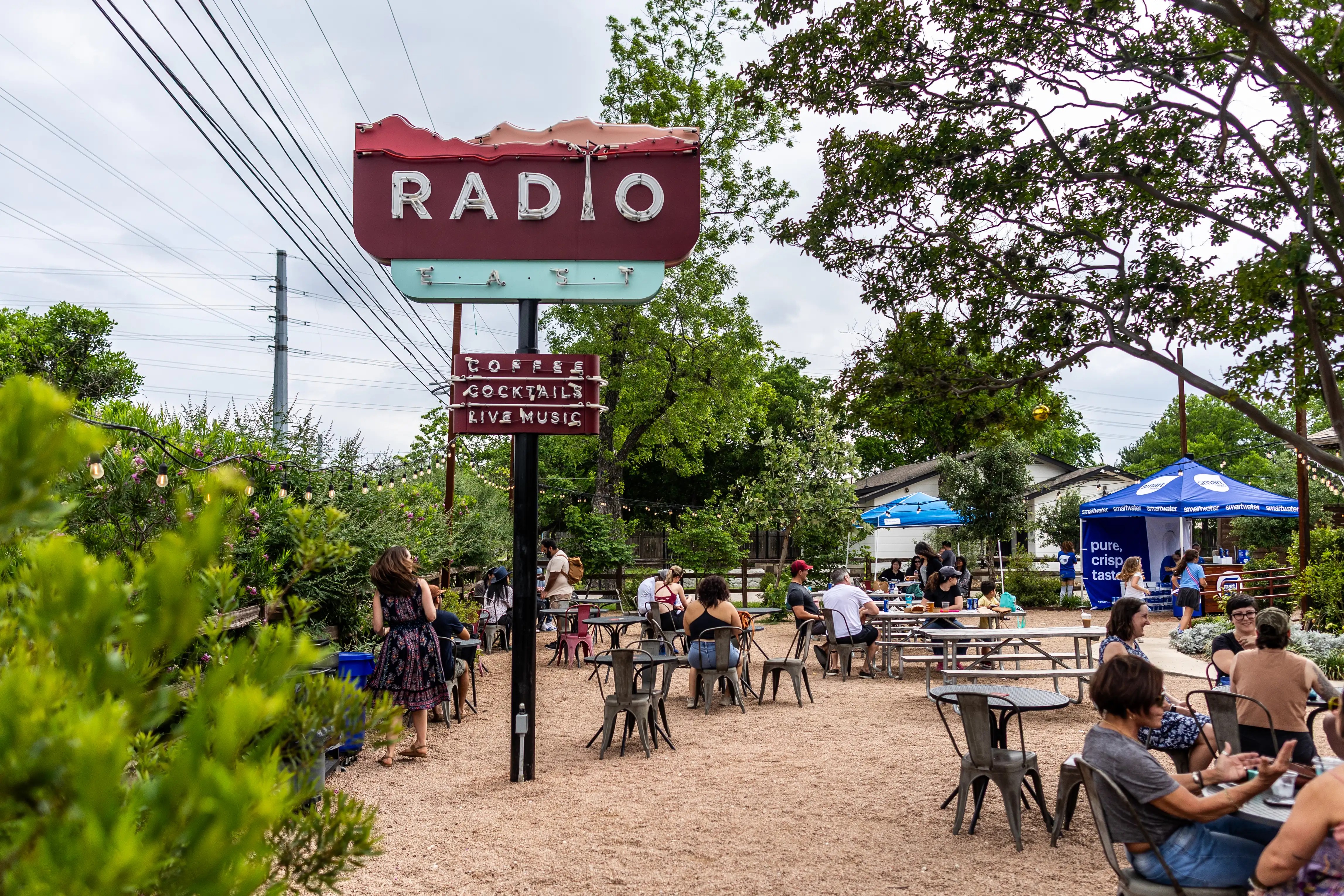
Commercial Roofing East, TX
Commercial roofers serving East, TX should document leak sources, wet insulation, drainage, edge details, penetrations, and repair history before recommending a scope. East Austin has gone from a legacy industrial and residential neighborhood to one of Austin's most active commercial markets in under two decades. The warehouse-to-restaurant conversions, Mueller's planned commercial, and the Airport Boulevard corridor are all at active maintenance inflection points. We are eight minutes from East 6th Street.
East Austin's commercial transformation is one of the more dramatic land-use stories in any American city over the past 20 years. The area east of I-35 and north of Cesar Chavez, which was predominantly light industrial, single-family residential, and auto-oriented retail as recently as 2005, now contains some of Austin's highest-demand restaurant real estate on East 6th Street, the 78702 zip code that has attracted more creative office and food-and-beverage tenants than any other zip code in the city, and the Mueller redevelopment district, which has transformed the former Robert Mueller Municipal Airport into a 700-acre mixed-use neighborhood with commercial, office, and retail buildings.
The commercial buildings that define East Austin's identity are disproportionately warehouse and light-industrial structures that have been converted to restaurant, bar, coffee roaster, and creative office use. A 1960s warehouse shell with a flat gravel-surfaced BUR roof that was perfectly adequate for a tire shop becomes a critical leak liability once it houses a busy restaurant with a 7-day operating schedule. The conversion boom of 2008 through 2018 produced a cohort of buildings in 78702 and 78721 that now have aging roofs over high-revenue tenant uses.
We are eight minutes from East 6th Street and the means East Austin is as close to our office as any submarket we serve. For emergency dry-in on a restaurant or bar building with a Friday night leak event, that proximity matters.
Warehouse Conversions and Restaurant Roofing
The warehouse-to-restaurant conversion buildings along East 6th Street, East Cesar Chavez, and the side streets of 78702 present a specific roofing challenge: the original building was designed for uses with no leak sensitivity, but the current use has zero tolerance for interior water intrusion. A 1965 warehouse with a 30-year-old modified bitumen recover over original gravel BUR is not a roof that can be patched indefinitely, but the conversion investment the tenant or owner made in the interior buildout makes the consequences of continued deferral severe.
Our East Austin warehouse conversion assessments focus on two questions: is the existing assembly recoverable, and if so, for how long? Core sampling tells us whether the insulation is dry. If it is, a TPO recover with targeted insulation replacement at wet zones can extend the asset 15 to 20 years at roughly half the cost of full replacement. If cores show saturation, common on 30-plus-year systems, replacement is the honest recommendation, and we scope it that way.
Restaurant and bar uses add specific rooftop complications: grease exhaust curbs, makeup air units, walk-in cooler condenser curbs, and the high HVAC turnover rate as equipment is replaced or added. Each new penetration is a flashing question. We have seen East 6th Street buildings where the number of rooftop penetrations has doubled from the original building's design because tenants have added equipment without involving a roofing contractor in the flashing work. Our East Austin inspections always include a full penetration audit.
Mueller Redevelopment District
The Mueller redevelopment covers 700 acres on the former Robert Mueller Municipal Airport site in central east Austin. The commercial and office buildings in Mueller were built primarily between 2008 and 2020, they are predominantly 5 to 15 years old with TPO and EPDM systems that are at or approaching the first major maintenance window. The retail along Mueller's main commercial streets, the office buildings near the central park, and the medical facilities defined by Ascension Seton Medical Center at Mueller represent the commercial roofing inventory.
Mueller's design standards, the development is a New Urbanist planned community with architectural controls, mean rooftop equipment visibility is a design constraint. Equipment placement and screening requirements affect how we stage crane picks and position new HVAC curbs on Mueller commercial buildings. We review the relevant Mueller Community Association design standards before scoping any project in the development.
Ascension Seton Medical Center at Mueller is one of the newer large-format healthcare facilities in east Austin. As with all healthcare facilities, zero-leak tolerance applies to the surgical and critical care areas. We approach Mueller medical buildings with the same critical-zone mapping protocol we use for all healthcare-adjacent roof work.
Airport Boulevard and Inner East Austin Industrial
Airport Boulevard, the arterial running northeast from the I-35 interchange through the 78752 and 78721 zip codes, retains a significant legacy commercial and light-industrial inventory alongside the newer mixed-use development. Auto-oriented retail, small-bay industrial parks, and the commercial buildings serving the Govalle and Johnston Terrace neighborhoods represent the pre-gentrification commercial fabric of east Austin. These buildings are older, have had limited capital investment in roofing, and often have the layered-repair history that makes a full assessment necessary before any further maintenance spending.
Inner east Austin also has a cluster of HVAC and electrical contractor shops, auto repair facilities, and light manufacturing operations in the industrial pockets between Airport Boulevard and I-35. These buildings have functional flat roofs that need maintenance but rarely get it until a leak forces the issue. Our Airport Boulevard inspections often find roofs that have been ignored for years and need a clear decision: document the current condition, establish a realistic cost for correction, and let the owner make the call.
How do you handle emergency roof repair on a restaurant that operates seven days a week?
We coordinate with the restaurant manager to identify times when access to the roof above operating areas is least disruptive, typically the two to three hour window before service on a given day. For emergency dry-in after storm damage, we work around the schedule rather than requiring the business to close. The dry-in is a temporary cover; the permanent repair gets scheduled for the lowest-impact time window the manager identifies.
My East Austin warehouse has had the same roof patched for 20 years. Do I really need a full assessment before deciding what to do next?
Yes, and specifically because of the patching history. Each patch covers the visible symptom but does not tell you whether the insulation under the patch, or the insulation in the unpatch zones around it, is saturated. A building with 20 years of patches may have wet insulation across a significant portion of the roof that is silently deteriorating the deck below it. Core sampling gives you a map of where the wet insulation is. That map determines whether another patch, a recover, or a full replacement is the right next move.
Does Mueller have special design review requirements for rooftop equipment?
Yes. The Mueller Community Association maintains design standards that address rooftop equipment visibility from adjacent streets and public spaces. New or replacement equipment that exceeds existing screening height may require design review. We identify this as a potential constraint in the pre-scope process on Mueller buildings and advise the building owner on whether the proposed scope triggers review.
Get a roof assessment for your East Austin building.
We are eight minutes from East 6th Street. Our project managers will walk the roof, pull cores if needed, and deliver a written condition report within five business days.
Leak points, drainage, seams, penetrations, edge metal, roof access, and interior risk should be clear before the next roof decision is priced.
Immediate repair, maintenance, coating, recover, and replacement choices should be measured against roof age, moisture risk, tenant disruption, and budget timing.
A site visit is useful when the owner needs a documented roof condition, active leak response, storm review, or a clearer capital plan.