
A Service Contract That Makes the Roof Last Longer
A commercial roof is one of the largest single line items a building owner will ever replace, and the replacement date is not fixed. The same TPO or modified bitumen roof can fail at year twelve or keep working at year twenty-five, the difference is almost never the membrane brand. It is whether anyone was on the roof between problems. Our roof service agreement exists to make sure someone is: we put a crew on your roof twice a year, on a schedule, whether or not anything appears to be wrong.
The two visits are timed to the Central Texas calendar. The spring visit happens before the long stretch of 100-degree days arrives, when thermal expansion starts working on every seam, lap, and penetration on the roof. The fall visit comes after the heat breaks, we check what the summer did to sealants and flashings, clear drains and scuppers, and get the roof ready for the storm runs that roll through in late fall. Every visit ends with a photo-documented condition report, so you hold a running history of the roof instead of a drawer of repair invoices.
What Happens on Each Scheduled Visit
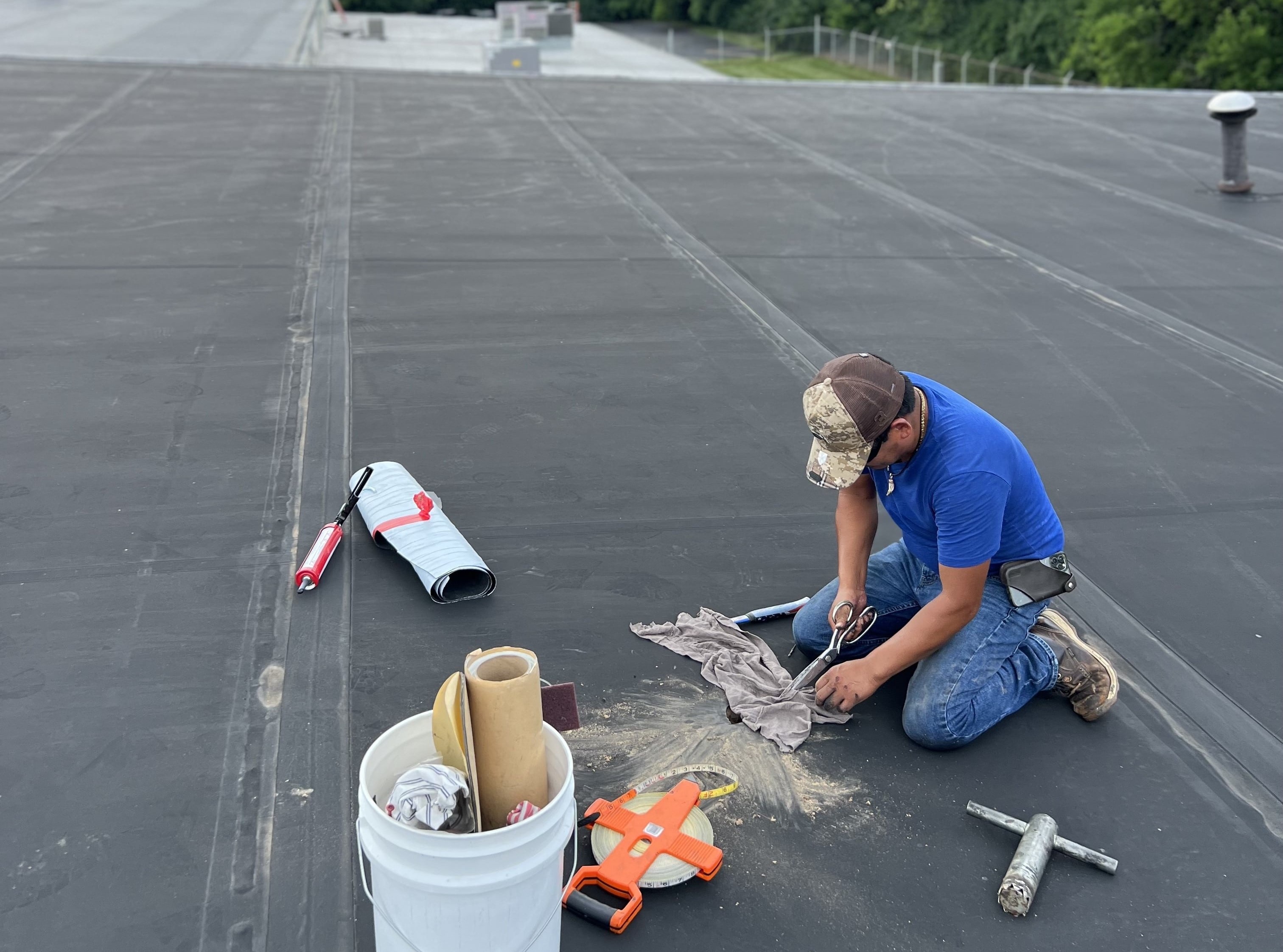
A service visit is work, not a walk-through. The crew walks the full membrane and checks every seam and termination, reseats or re-caulks flashings that have lifted, clears debris from the field of the roof, and opens up every drain, scupper, and gutter. Ponding after a heavy rain is the most common thing we get called about in Austin, and blocked drainage is the most preventable cause of it. Small membrane repairs, splits, blisters, open laps, get fixed during the visit rather than written up for a second truck roll.
Within two business days you receive the report: photos of every deficiency found, what was corrected on the spot, and a short priority list of anything that needs scheduled work before the next visit. Owners with manufacturer warranties should note that this documentation is exactly what GAF, Carlisle, and the other major manufacturers expect to see when a warranty claim is filed, an undocumented roof is a warranty argument waiting to happen.
Deferring Replacement Is the Whole Point
The economics of a service agreement are not complicated. Two serviced visits a year cost a small fraction of one percent of what a tear-off and replacement runs on a mid-size commercial building. When scheduled service pushes replacement out five or more years, and on most roofs we service, it does, the agreement pays for itself many times over. Just as important for anyone managing a budget: the condition reports give you a realistic read on remaining service life, so replacement becomes a planned capital project instead of an emergency purchase at the worst possible price.
That logic holds across every building type we service, office parks along the US-183 corridor, warehouses and light industrial in Pflugerville and Round Rock, retail and restaurant roofs where a leak means closed dining rooms. Hail exposure north of the river makes the documented condition history doubly useful: when a storm does hit, you can show an adjuster exactly what the roof looked like before.
Put Your Roof on a Service Schedule
We will walk the roof once, note its condition, and quote a flat annual price for the service agreement, two scheduled visits, drain clearing, on-the-spot minor repairs, and the reports. Call 512-601-8710 or send the building address and we will set up the first walk.
Pricing is a flat annual figure based on roof area, the number of penetrations and rooftop units, and access. We quote it after one initial roof walk, there is no charge for the walk.
Yes. Major manufacturers require documented periodic inspections to keep a warranty in force. The visit reports are written to serve as that documentation and can be submitted directly with a claim.
Yes. We start every takeover with a baseline condition report so responsibility is clear from day one, then fold the roof into the normal visit schedule.
Agreement holders get priority dispatch. Because we already know the roof, its history, its access, its details, the repair crew arrives with the right materials instead of starting from zero.