
Commercial Roofing Rollingwood, TX
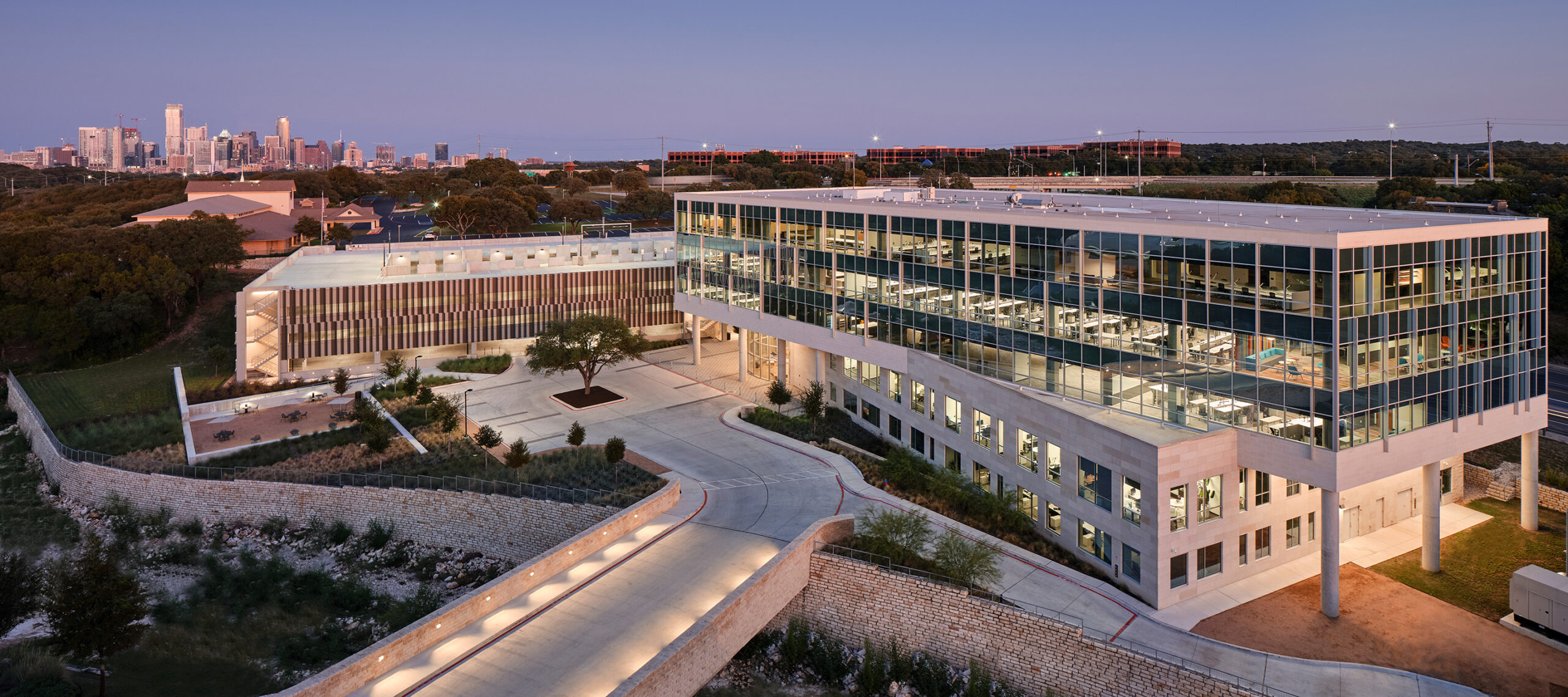
Commercial roofers serving Rollingwood TX, TX should document leak sources, wet insulation, drainage, edge details, penetrations, and repair history before recommending a scope. Rollingwood is one of Austin's smallest incorporated cities, a compact footprint on the MoPac escarpment just north of Barton Creek. Its commercial cluster is small but the property values are high and the buildings have been there long enough that many are now at the roof replacement decision point.
Rollingwood is sandwiched between West Lake Hills to the south and the City of Austin to the north and east, with MoPac (Loop 1) forming its eastern boundary. The city has very limited commercial zoning, the commercial buildings here are concentrated in a small cluster near the intersection of Capital of Texas Highway (360) and Rollingwood Drive, supplemented by a handful of professional office conversions along the city's arterials. This is not a high-volume commercial market, but the buildings that exist here are well-maintained, have affluent ownership and tenancy, and deserve scope quality that matches the surrounding investment.
Most of Rollingwood's commercial buildings were constructed in the 1970s and 1980s. At 40-plus years, those with original roofing systems are well past the replacement threshold. Many have gone through one or two patch cycles and now need a full assessment to determine whether a tear-off replacement is the correct capital move or whether a fluid-applied coating over a still-sound membrane can extend the asset another decade.
The Barton Creek Greenbelt adjacency that makes Rollingwood a desirable residential enclave also creates specific conditions for commercial building maintenance. The tree canopy over parts of the commercial cluster accelerates debris accumulation in drains and on membrane surfaces, we find clogged drains and ponding on Rollingwood roofs more often than on buildings in fully exposed urban settings. Our inspection protocol documents drain condition and debris load as a primary maintenance item on every Rollingwood building we assess.
Small-Footprint Commercial on the MoPac Escarpment
Rollingwood's commercial buildings are small by metro standards, most run 2,000 to 10,000 square feet on footprints that work around the limestone topography. Office suites serving the surrounding residential market: accountants, attorneys, financial planners, and the occasional medical or dental practice. These are not buildings where the roof replacement will be managed by a corporate facilities team, typically the building owner or a property manager with a small portfolio is making the call.
For this ownership structure, our process emphasizes clear documentation. The scope walk produces a written condition report with photos organized by zone, a core sample record if moisture saturation is a question, a cost range for the recommended scope, and an alternative scope (recover vs. replace, or coating vs. replace) when the data supports it. The owner gets enough information to make a sound capital decision, not just a quote.
Because these roofs are small, we can typically complete a full replacement in three to five days of production. That keeps the project management overhead proportional to the project size, we do not overadminister small roofs.
Older Roof Systems and the Replace-or-Coat Decision
Rollingwood's 1970s and 1980s commercial buildings typically have one of three conditions: original built-up roofing (BUR) that has been patched but never replaced; a single TPO or modified bitumen recover installed over the original BUR in the 1990s or 2000s; or a two-layer assembly at maximum allowed recover thickness that now must be torn off before anything new can be added.
The replace-or-coat decision on mid-life Rollingwood roofs depends on core sampling and surface condition. If the existing membrane is sound (no blisters, no open seams, no punctures) and the insulation is dry (confirmed by core samples), a silicone or acrylic fluid-applied coating with a 10 to 15-year manufacturer warranty can defer full replacement at meaningful cost savings. If the membrane has open seams or the insulation shows moisture saturation, coating is not the right scope, it seals moisture in and accelerates deck deterioration.
We pull cores before recommending coating on any Rollingwood building. If the cores show dry insulation and the membrane is sound, we present the coating option with honest numbers. If cores show saturation, we explain why coating is not appropriate and present the replacement scope.
Tree Canopy and Drain Maintenance
The mature tree canopy over much of Rollingwood's commercial cluster, live oak and cedar elm that have grown to full height over the past 40 years, creates a debris load on flat roofs that exceeds what most urban commercial buildings experience. Leaf accumulation in drains is the primary maintenance issue we find on Rollingwood buildings: clogged interior drains lead to ponding, ponding leads to membrane stress at the drain collar, and drain collar failure is a common first-leak source on flat roofs in this setting.
We document drain condition on every Rollingwood scope walk and include drain cleaning and collar inspection in the maintenance contracts we write for buildings in this city. An annual drain inspection and cleaning at the start of fall, when leaf drop from the live oaks peaks, prevents the ponding cycle that shortens membrane life.
Is Rollingwood under Austin's jurisdiction for building permits?
No. Rollingwood is an independent municipality with its own permitting process. We pull the Rollingwood permit as part of pre-construction setup. The city is small and permit timelines are typically shorter than Austin's Development Services Department for commercial roofing projects.
How do you handle debris and disposal on a small Rollingwood commercial roof?
We stage a dumpster in the parking lot or driveway during production. On very small projects where a full dumpster is not warranted, we haul material on flatbed and dispose at the appropriate Travis County or Hays County facility. We do not leave debris on-site overnight. The parking lot is swept and restored to normal condition at the end of each production day.
Can a fluid-applied coating extend the life of a 1980s roof in Rollingwood?
It depends on current membrane and insulation condition. Core sampling is the deciding test. If insulation is dry and the membrane is intact, a properly applied silicone coating with a 10 to 15-year manufacturer warranty is a legitimate option. If cores show moisture saturation, coating is not a sound recommendation regardless of cost savings, we will tell you that clearly rather than sell a coating that fails in three years.
Get a written roof assessment for your Rollingwood building.
We cover the full west Austin commercial cluster including Rollingwood and West Lake Hills. Condition reports delivered within five business days of the site visit.
Leak points, drainage, seams, penetrations, edge metal, roof access, and interior risk should be clear before the next roof decision is priced.
Immediate repair, maintenance, coating, recover, and replacement choices should be measured against roof age, moisture risk, tenant disruption, and budget timing.
A site visit is useful when the owner needs a documented roof condition, active leak response, storm review, or a clearer capital plan.