
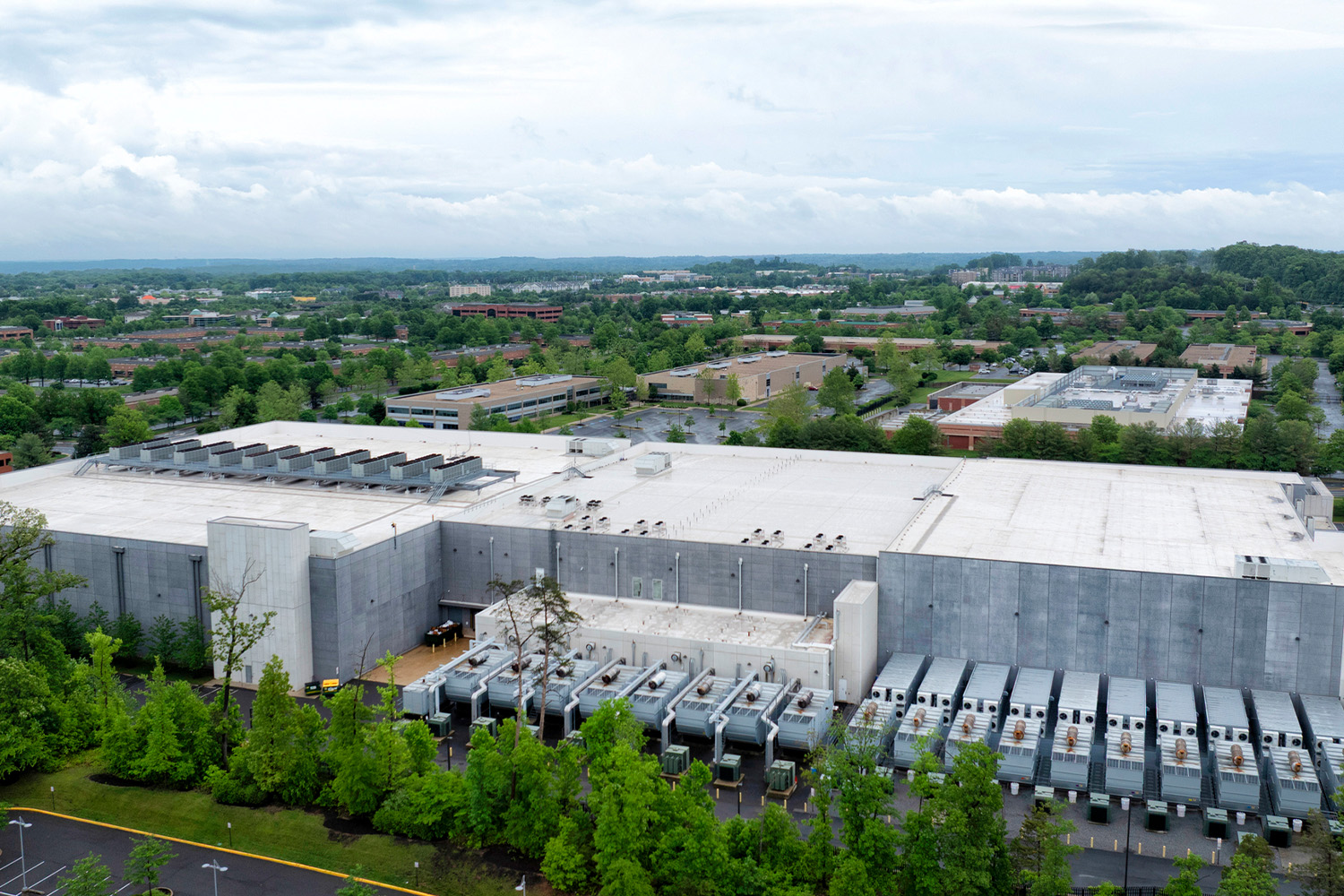
Data Center Roofing in Austin, TX
Data center roofing for colocation facilities, server rooms, and mission-critical buildings throughout Austin, TX.
Austin has established itself as one of the most active data center markets in North America, driven by the combination of tech sector employment concentration, major cloud provider investments, and the ERCOT grid's availability of large power blocks for hyperscale facilities. Apple's data center campus on the north Austin-Cedar Park border, Google's data center investment in the metro region, and Amazon Web Services' substantial Texas cloud infrastructure all contribute to a market where data center roofing demand is consistently strong. The Samsung semiconductor complex in Austin and Round Rock's Dell Technologies campus ecosystem have also driven enterprise data center investment that dates back decades and continues to grow.
Austin's data center roofing market operates under Texas heat that reaches sustained 100°F+ periods from June through September, placing premium importance on reflective membrane selection and proper thermal performance of the roof assembly. The cooling cost advantage of a white TPO or PVC membrane versus a dark surface is more financially significant in Austin than in most U.S. markets because the cooling season is so long and facilities run full mechanical cooling for roughly six months out of the year. Apple's Parmer Lane campus and similar hyperscale investments in north Austin include reflective membrane specifications as a standard requirement, not an upgrade option, precisely because of this operating cost reality.
CRAC and CRAH unit penetration density at Austin's larger data centers reflects the market's shift toward higher-density computing loads. The GPU-accelerated compute nodes that cloud providers are deploying for AI workloads generate heat at 30 to 50 kW per rack, significantly higher than traditional server loads, which drives cooling system capacity and, consequently, rooftop HVAC footprint. A 2024-era AI compute cluster floor requires two to three times the cooling equipment penetration density of a 2015-era general-purpose data hall of similar square footage. Austin roofing contractors working on new data center construction or retrofit projects need to be prepared for penetration fields that look unlike anything the industry standardized on even five years ago.
Generator systems at Austin data centers involve a specific regulatory consideration: TCEQ (Texas Commission on Environmental Quality) air quality permits for diesel generators above certain emission thresholds. Large facilities deploying multiple megawatts of generator capacity must obtain TCEQ permits that specify operating hours and emission controls. The exhaust stack design, height, exit velocity, and dispersion characteristics, is part of the permit application, and the roof penetration design for generator stacks must accommodate the stack geometry specified in the permit. Coordination between the permit engineer, mechanical designer, and roofing contractor is essential to avoid a situation where the permit-required stack dimensions don't match the as-built roof penetration design.
Central Texas weather creates a hail risk profile that Austin data center operators take seriously. The region sits in a Hail Alley transition zone, receiving significant hailstorms in April and May that can deposit golf ball to softball-sized hail on data center roofs. Unlike Northern Virginia or Chicago where hail is less frequent, Austin facilities on multi-acre campuses represent a very large exposure area for any hail event that passes overhead. Cover board specifications, typically 1/4 to 1/2-inch high-density material over the primary insulation layer, have become standard on new Austin data center construction, providing FM Global hail ratings that satisfy both the insurance underwriters and the operators' risk management teams.
The Domain, Austin's mixed-use tech campus district in north-central Austin, and the R&D corridor along US-183 and Mopac include a mix of enterprise data centers, colocation facilities, and edge compute installations that represent the variety of Austin's data center market. Unlike the hyperscale campus market on the periphery, these urban and near-urban facilities often operate in buildings that weren't originally designed for data center use, meaning the roofing challenges include retrofitting adequate drainage, adding curbed openings for mechanical equipment in existing roof decks, and managing generator placement on constrained urban footprints.
TPO 80 mil on a tapered polyisocyanurate insulation system is the current market-standard specification for new Austin data center construction, balancing the reflective performance requirement, the hail protection need (when paired with cover board), and the cost efficiency that large campus projects demand. For retrofit projects in existing commercial or industrial buildings, the approach varies significantly based on what's already in place: a 1980s built-up roof converted to data center use may need a complete tear-off and system replacement, while a 2010s EPDM installation in good condition might be recovered with a TPO cap sheet and additional insulation to bring R-value to current standards.
Conduit and cable tray penetration coordination at Austin data centers benefits from the city's robust local contractor ecosystem. Austin has enough experienced data center contractors that pre-construction coordination meetings involving all penetration-creating trades, electrical, low-voltage, mechanical, and roofing, are standard practice on major projects. These meetings allow the roofing contractor to review the penetration drawings, raise any drainage routing concerns, and agree on a sequencing plan that prevents the situation where roofers finish membrane work and then three other contractors need to cut through it for their penetrations.
Raised floor load redistribution in Austin data center builds, particularly in converted office or R&D buildings along the 183 corridor, creates the same potential for changed drainage patterns noted in other converted building markets. Austin's clay soils add another variable: differential settlement over time can alter the as-built roof slope in older converted buildings. Annual slope surveys with a digital level on active data centers in Austin's central city or older suburban corridors are a worthwhile investment for facilities managers who want to stay ahead of ponding water problems before they become structural deck corrosion issues.
AI compute workloads at cooling system capacity that is two to three times what traditional data center designs required. On the roof, this means a higher density of CRAC/CRAH equipment curbs, larger cooling tower footprints in some configurations, and more conduit runs for electrical distribution to the increased cooling load. The structural roof deck loading from this equipment density may exceed the design capacity of converted buildings, requiring engineering review of deck capacity before rooftop equipment is specified. Roofing contractors on high-density Austin AI compute projects need to be in the conversation about structural loading from the beginning, not after the equipment specs are locked.
TCEQ air quality permits for standby generators above the permit threshold specify stack height, exit velocity, and sometimes exit geometry. The roof penetration for the stack must match the permitted stack design, which means the roofing contractor needs a copy of the TCEQ permit or the stack design drawings before finalizing the penetration flashing design. Stack height changes that require a permit amendment after the roof is installed create expensive retrofit situations. The most efficient path is a single pre-construction coordination meeting with the permit engineer, mechanical designer, and roofing contractor before any penetrations are cut.
For Austin data center roofs, a 1/4-inch fiberglass-mat gypsum cover board (approximately 1.5 lbs per square foot) achieves FM Global Class 1 SH (severe hail) rating when combined with 60 or 80 mil TPO, while adding minimal dead load compared to the insulation and membrane assembly. For facilities requiring the highest hail classification, a 1/2-inch cover board is preferred but adds approximately 3 lbs per square foot. In both cases, verify that the structural deck capacity rating supports the added load, particularly on steel deck spans longer than 5 feet where mid-span deflection increases under dead load.
Several Austin data center operators have added rooftop solar to their sustainability reporting, and it's achievable within manufacturer warranty terms when using pre-approved ballasted mounting systems. The key requirements are: manufacturer approval of the specific mounting system, minimum 10 PSF ballast load on a roof designed for it, walkway pad protection under all racking legs, and no membrane penetrations for structural attachments. The roof layout needs to account for the solar array footprint without blocking roof drain access or creating drainage dams that pond water under the array.
After a significant hail event (3/4 inch diameter or larger), the standard documentation sequence is: visual inspection within 48 hours to identify obvious surface damage and any active leaks, followed by a full infrared scan within 30 days to identify subsurface moisture that hasn't yet shown up as a visible problem. The infrared scan results should be documented with GPS-tagged images and a moisture map overlay on the roof plan. This documentation package supports insurance claims, provides a warranty claim record if the membrane manufacturer's hail warranty is invoked, and establishes a baseline for the post-event condition of the system.
When is the best window for roofing work on an active Austin school or university building?
Summer break, mid-May through mid-August for most Austin ISD schools, and May through August for most UT buildings, is the primary production window for occupied educational facilities. This is also peak commercial construction season in Austin, which makes scheduling lead time important. We recommend initiating the scope and contract process no later than January or February for summer production. Fall and spring work can be scheduled during breaks in the academic calendar for smaller projects.
Does UT Austin have specific requirements for roofing contractors working on campus?
Yes. UT System procurement rules govern contractor qualification and selection. Scope documentation must meet UT's capital project reporting standards, and closeout packages must include warranty documentation formatted for the University's asset management system. We are familiar with these requirements from direct experience with UT campus work, we do not treat UT projects as standard commercial jobs with extra paperwork.
How do you handle suspected asbestos in older school roof systems?
We identify suspected ACM materials in the pre-scope walk, built-up roof felts, pipe insulation at penetrations, and flashing compounds on buildings from the 1950s through the early 1980s are the primary suspect materials. A licensed industrial hygienist samples suspect materials before tear-off scope is finalized. If ACM is confirmed, abatement scope is coordinated with a licensed Texas abatement contractor and completed before any roofing tear-off begins. Abatement cost and scheduling are included in the overall project scope, not added as a change order after contract.
Schedule an educational facility roof assessment in Austin.
We work with UT Austin Facilities Services, Austin ISD, St. Edward's University, and Austin-area school districts. Our project managers deliver scope documentation formatted for institutional capital planning processes.
Leak points, drainage, seams, penetrations, edge metal, roof access, and interior risk should be clear before the next roof decision is priced.
Immediate repair, maintenance, coating, recover, and replacement choices should be measured against roof age, moisture risk, tenant disruption, and budget timing.
A site visit is useful when the owner needs a documented roof condition, active leak response, storm review, or a clearer capital plan.